
Kohistani Culture of Pakistan
The Kohistani culture of Pakistan is one of the old and least known indigenous culture which is deeply rooted in northern mountain of Khyber Pakhtunkhwa and The Kohistani people live along the Indus River in Upper Kohistan, Lower Kohistan and Kolai Palas of Pakistan and Kohistan regions once united as a single Kohistan district. Their culture, languages and tradition are distinct from neighboring Pashtun communities making Kohistan a unique cultural zone within Pakistan.
Read more about : Hazara Culture of Pakistan
Historical Background of Indus Kohistan
The word Kohistan means land of mountains in Persian which perfectly describes this rugged and scenic region. Historically Indus Kohistan remained isolated from outside influence due to its difficult terrain. This geographic isolation helped preserve local traditions, languages and social systems for centuries.
Before being divided into three districts Upper Kohistan, Lower Kohistan and Kolai Palas Kohistan ,Kohistan existed as one administrative unit in KPK. The people lived in small villages dependent on agriculture, cattle rearing and forest resources.
Because Kohistan lies along ancient trade and migration routes near Central Asia, its culture reflects traces of old Indo-Aryan civilization, different from surrounding regions.
Languages of Indus Kohistan
Kohistan is linguistically diverse with several Indo Aryan languages spoken across valleys. Some major languages include:
- Indus Kohistani
- Shina
- Gowro
- Bateri
- Torwali (in nearby areas)
These languages are not widely written and are mainly passed through oral traditions in Pakistan. Sadly the younger generation are rapidly shifting toward Urdu and Pashto threatening the survival of native languages.
Lifestyle and Traditions of Kohistani People
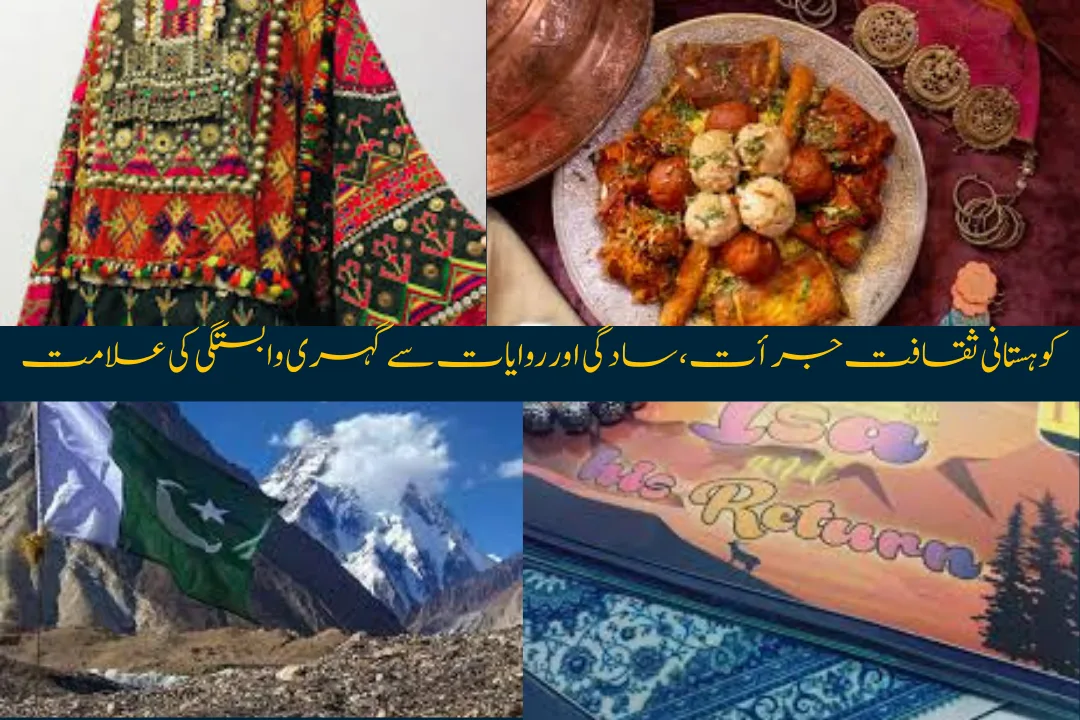
Traditional dress reflects mountain life and weather conditions.
Men often wear:
- Woolen caps
- Long shirts with wrapped turbans
- Traditional waistcoats
Women wear:
- Embroidered dresses
- Heavy jewelry made from silver and stones
- Handwoven shawls during winter
Food:
Famous Food of Kohistani include:
- Maize bread
- Local butter and milk
- Dried fruits
- Mountain herbs
- Meat dishes prepared in traditional ways
Social Structure
Kohistani society is organized around tribes and clans and respect for elders, hospitality and community support are deeply valued for the Kohistani Culture of Pakistan also Weddings and festivals are celebrated with music, dances and communal feasts.
کوہستانی معاشرہ قبائل اور برادریوں کے نظام پر قائم ہے، جہاں بزرگوں کا احترام، مہمان نوازی اور باہمی تعاون کو بہت اہمیت دی جاتی ہے۔ کوہستانی ثقافت میں سماجی رشتے مضبوط ہوتے ہیں اور لوگ ایک دوسرے کے دکھ سکھ میں شریک رہتے ہیں۔ شادیوں اور تہواروں کو خاص جوش و خروش سے منایا جاتا ہے، جن میں روایتی موسیقی، رقص اور اجتماعی دعوتیں شامل ہوتی ہیں، جو ان کی ثقافتی خوبصورتی اور اتحاد کو ظاہر کرتی ہیں
Intangible Cultural Heritage: A Dying Treasure
Indus Kohistani culture is rich in intangible heritage including:
- Folk stories
- Mountain songs and poetry
- Herbal medicine
- Animal healing traditions
- Rituals and symbolic customs
- Indigenous knowledge of plants
Unfortunately much of this cultural wealth is disappearing and Oral traditions are fading because they were never recorded in written form and Many skilled elders who knew traditional medicine, folklore and rituals have passed away without transferring knowledge of this unique Kohistani culture of Pakistan.
Preservation Efforts: Kohistani Culture Development Program
Recognizing the crisis, the Indigenous People’s Network launched the Kohistani Culture Development Program (KCDP) in 2012 to document and protect Kohistani heritage.
The foundation of this effort was laid by Mr. Talib Jan Abasindhi, who began an ethnographic study in 2002 using the famous anthropological framework
His research became the base for long-term documentation of:
- Cultural systems
- Social traditions
- Indigenous medical practices
- Oral literature
- Tools and artifacts
Today his book is in the editing phase and is expected to be one of the first comprehensive records of Kohistani culture in English.
Cultural Threats Faced by Kohistan
Kohistani heritage faces serious challenges:
- Rapid modernization
- Dam construction and displacement
- Decline in native languages
- Unemployment-driven migration
- Loss of elders with knowledge
- No formal cultural syllabus
Without urgent digital archiving and documentation, Pakistan risks losing one of its original cultural identities forever.
Read more : Beautiful places of Pakistan
Importance of Kohistani Culture for Pakistan
Kohistan is part of Pakistan’s civilizational identity. Preserving Kohistani culture:
- Protects indigenous diversity
- Safeguards ancient knowledge
- Encourages eco-tourism
- Strengthens national heritage
- Honors local communities
Conclusion
The Indus Kohistani culture of Pakistan is a priceless legacy of Pakistan. It is a beautiful and unique culture of Pakistan because It tells the story of survival, wisdom and adaptation in the hardest of terrains. Saving this heritage is not just a responsibility of the Kohistani people, it is a national duty. By supporting research programs, educational inclusion and cultural documentation, Pakistan can ensure the Kohistani identity lives on for generations.