
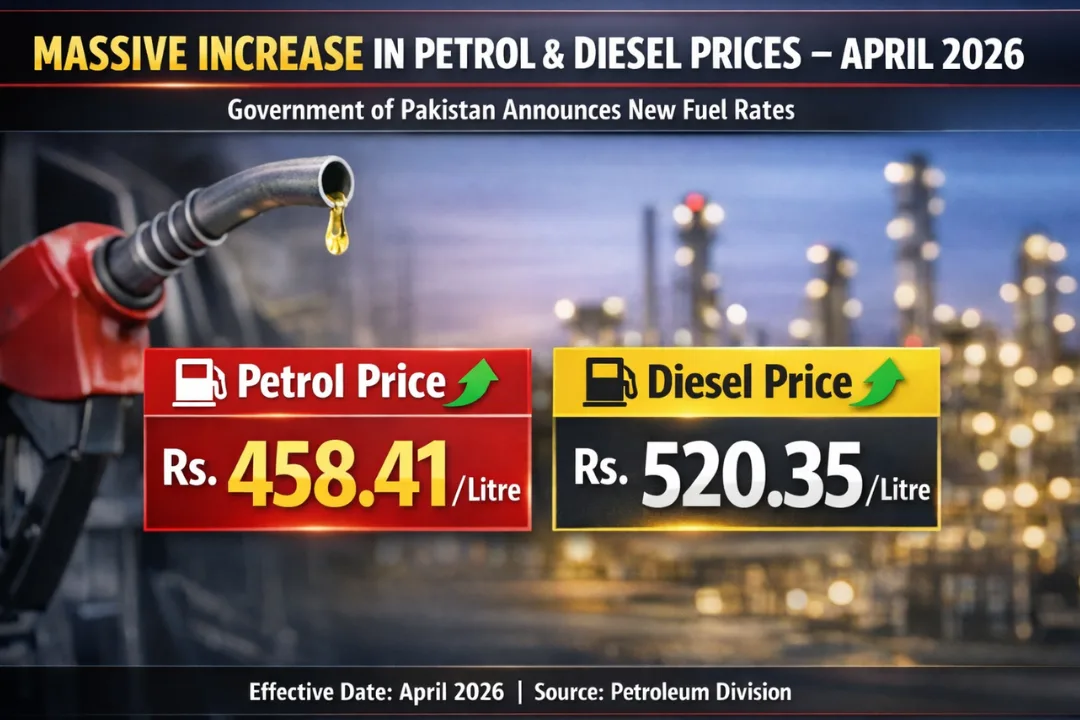
Massive increase in Petrol Price April 2026
According to the official notification, the price of petrol has been increased by Rs. 137.24 per litre, bringing the new price to Rs. 458.40 per litre The price of high-speed diesel has also seen a major hike of Rs. 184.49 per litre, setting the new rate at Rs. 520.35 per litre.
| Date | Petrol | Diesel | Petrol rate Changes | Diesel rate Changes |
|---|---|---|---|---|
| 25 March 2026 | 458.40 per litre | 520.35 per litre | 137.24 | 184.49 |
Petrol prices follow the official rates set by the Government of Pakistan and are usually the same across all major cities of Pakistan which include Lahore, Karachi , Islamabad and Multan. However these slight differences may occur due to transportation (freight) costs and Petrol and Diesel is a basic necessity for cars, motorcycles and transport. When its prices increase, the cost of everything else also goes up.The constantly changing prices create difficulties for the public, especially for people with low incomes
Latest Petrol Price 2026
the current fuel prices are:
- Petrol (Super): Rs. 458.40 per litre
- High-Speed Diesel (HSD): Rs. 520.35 per litre
- Kerosene Oil: Rs. 428.21 per litre
- Light Diesel Oil: Rs. 159.76 per litre
Shell V power price in Pakistan
Government (OGRA) sets regular petrol price But Shell V-Power price and Hi-Octane price is NOT fixed companies like Shell set it themselves
For the high-performance vehicle Shell V-Power price is Rs. 635 . For most people in Pakistan (including Multan), V-Power is expensive and unnecessary
Read more : Petrol price in All Cities of Pakistan
Factors affecting Petrol Price in Faisalabad
Several major factors affect petrol and Diesel prices:
Global Crude Oil Prices
Pakistan imports most of its oil from other countries. When international oil prices rise, local prices automatically increase.
Exchange Rate (Dollar vs Rupee)
A weaker Pakistani rupee increases import costs which leads to higher petrol and diesel prices.
Middle East Tensions
Recent conflicts in the Middle East increased oil prices globally which directly impacted Pakistan.
Import Dependence
Pakistan imports oil from other countries like Saudi Arabia and UAE which making it vulnerable to global supply shocks.
Petroleum Levy and Taxes
Petrol prices in Multan include several government charges:
Petroleum Development Levy (PDL)
- A major source of revenue for the government
- Can be increased to meet IMF targets
General Sales Tax (GST)
- Applied on petroleum products (varies)
Dealer Commission & Freight Charges
- Petrol pumps earn commission
- Transport cost slightly increases price in cities like Multan
These taxes form a significant portion of the final petrol price.
Breakdown of Petrol Price (Approx)
- Base Price (Import cost): 50–55%
- Taxes & Levy: ~30–35%
- Distribution & Dealer Margin: 10–15%
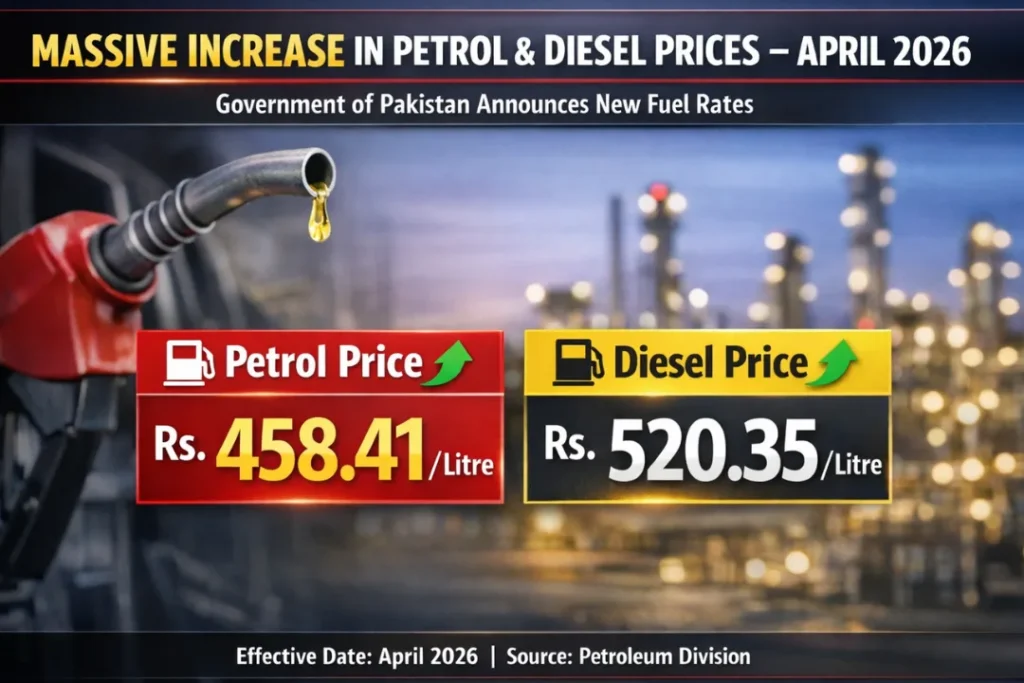
Crude Oil Price impact Pakistan
The sharp rise in global crude oil prices (above $110/barrel) has had an immediate and severe impact on Pakistan’s economy, forcing the government to increase petrol to Rs 458.40/litre and diesel to Rs 520.35/litre driven mainly by escalating tensions in the Middle East and fears of supply disruption through key routes like the Strait of Hormuz.Brent crude moved back above $100 a barrel, reviving pressure on oil-importing economies like Pakistan as markets reacted to fresh uncertainty in the Middle East. According to recent news and Google Trends patterns, searches for “oil prices” and “petrol price in Pakistan” have spiked as countries like Pakistan passed on the increased costs to consumers, pushing petrol above Rs 458.41 per litre. The surge is fueled by supply uncertainty, geopolitical conflict, and market speculation, while Pakistan’s heavy reliance on imported oil and a weaker currency further amplifies the impact, making fuel price hikes almost immediate whenever global crude prices rise.
- Fuel prices surge : Petrol and diesel reach record highs
- Inflation increases : Daily essentials become more expensive
- Transport costs rise : Fares and logistics charges go up
- Food prices jump : Higher cost of vegetables, flour, and groceries
- Electricity becomes expensive : Power generation costs increase
- Rupee weakens : More pressure due to higher dollar demand for imports
- Economic slowdown : Businesses face higher costs and reduced growth
Reasons Behind the Increase
Government sources stated that the hike in petroleum prices is due to:
- Rising global crude oil prices
- Depreciation of the Pakistani Rupee
Experts warn that this increase may further accelerate inflation across the country.
Impact on Daily Life
The rise in fuel prices is expected to:
- Increase transportation costs
- Raise prices of food and essential commodities
- Affect construction and industrial sectors
- Burden on middle and lower-income families
FAQ’s
What is the petrol price today?
Petrol price today is Rs 458.41per litre
Why are petrol prices the same in all cities?
Petrol prices are the same in all cities because prices are regulated by the federal government.
When petrol prices change in Pakistan?
Petrol prices usually change every few days (sometimes weekly in emergencies).
What is the highest petrol price in Pakistan history?
Highest Petrol price in Pakistan is Around Rs. 458.41 per litre (April 2026).
Why is petrol and Diesel expensive in Pakistan?
Petrol and Diesel are expensive due to imports, taxes and currency depreciation.
Conclusion
The announcement of Massive increase in Petrol price April 2026 has triggered strong reactions from the public, with many urging the government to reconsider the decision or provide relief measures to ease the financial burden. High increase in Petrol prices seen a sharp rise in April 2026 that reached to Rs. 458.40 per litre and the increase is mainly driven by global oil price hikes, currency depreciation and government taxes like petroleum levy.