
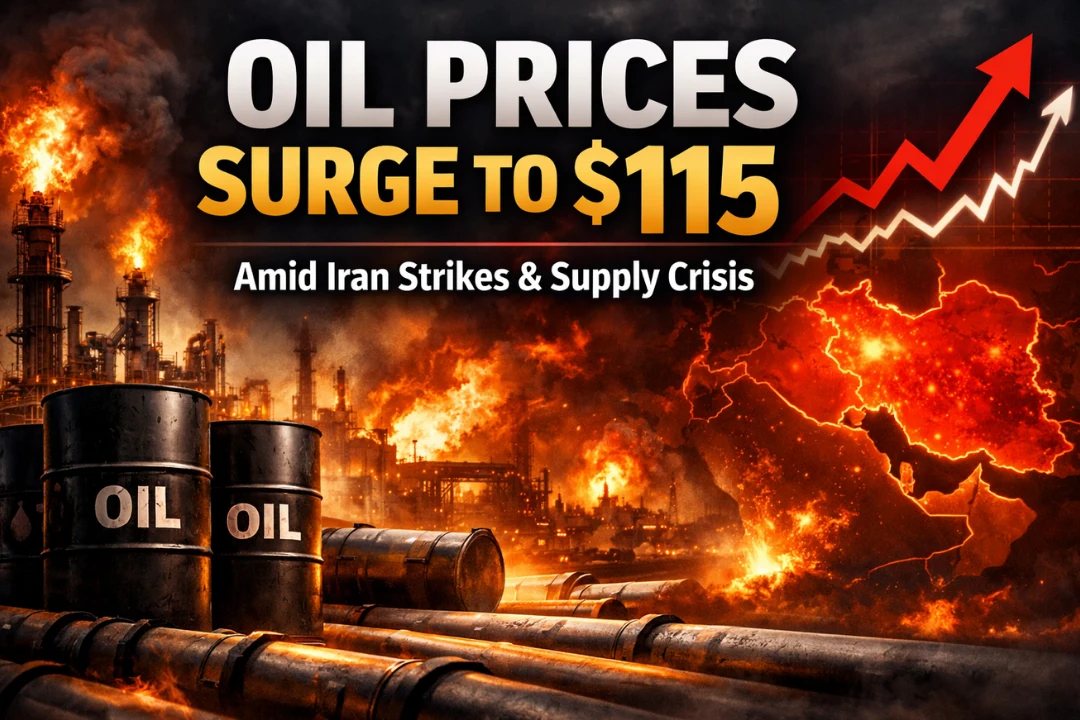
Oil Prices Surge to $115 Amid Iran Strikes
Global oil prices have surged sharply, crossing $115 per barrel, following escalating tensions in the Middle East. The recent US-Israeli strikes on Iran’s Kharg Island which is a key oil export hub that have triggered fears of supply disruptions, sending shockwaves across global energy markets.
Why Oil Prices Increased
The primary reason behind the spike is geopolitical instability. Kharg Island handles nearly 90% of Iran’s oil exports, making it a critical energy hub. Any military activity in this region immediately impacts global supply expectations.
Traders reacted quickly to the strikes, pushing oil prices higher due to concerns about potential disruption in oil flow.
Read more : Upcoming Petrol and diesel price in Pakistan April 2026 New Update
Crude Oil Prices Overview
Crude oil prices are the foundation of global fuel costs and are influenced by supply, demand, and geopolitical events. The recent surge to $115 per barrel reflects how sensitive crude markets are to conflict in oil-producing regions.
When supply risks increase such as tensions around Iran traders anticipate shortages and push prices higher. Benchmarks like Brent Crude and WTI (West Texas Intermediate) are used globally to track these price movements. A rise in crude oil prices directly leads to increased petrol and diesel prices, especially in import-dependent countries like Pakistan.
Latest Oil Price Update
- West Texas Intermediate (WTI): $115.55 per barrel
- Brent Crude: Around $110 per barrel
- Other fuel markets: Showing mixed but volatile trends
This reflects uncertainty in the global market, where different oil grades react differently to geopolitical developments.
Impact of Kharg Island Strikes
Kharg Island is not just another location, it is the backbone of Iran’s oil exports. Military strikes targeting the area, even if not directly hitting oil facilities, increase the risk of future disruptions.
Additionally:
- Around 20% of global oil passes through the Strait of Hormuz
- Any blockage or conflict in this region affects global supply chains
This creates panic in energy markets and leads to price spikes.
Global Economic Concerns
Rising oil prices are already impacting:
- Transportation costs
- Airline operations
- Food prices and supply chains
Experts warn that prolonged conflict could lead to inflation and economic instability worldwide.
Market Uncertainty and Future Outlook
Oil markets remain highly volatile. Analysts suggest:
- Prices could rise further if conflict escalates
- Supply shortages may worsen if export routes are blocked
- Damage to oil infrastructure could push prices even higher
The situation largely depends on geopolitical developments in the Middle East.
Conclusion
The Oil Prices Surge to $115 Amid Iran Strikes highlights how sensitive energy markets are to geopolitical tensions. The strikes on Iran’s Kharg Island have increased fears of supply disruption, pushing prices upward. If tensions continue, the world could face higher fuel costs and economic pressure in the coming months.
FAQ’s
1. Why did oil prices reach $115 per barrel?
Due to US-Israeli strikes on Iran’s Kharg Island, raising concerns about global oil supply disruption.
2. What are crude oil benchmarks?
The main benchmarks are Brent Crude and WTI, used globally to track oil prices.
3. How do crude oil prices affect Pakistan?
Pakistan imports oil, so any increase in global crude prices raises local petrol and diesel prices.
4. Can oil prices rise further?
Yes, especially if Middle East tensions escalate or supply routes are disrupted.
5. Why is the Strait of Hormuz important?
It is a key global oil transit route, handling about 20% of the world’s oil supply.