
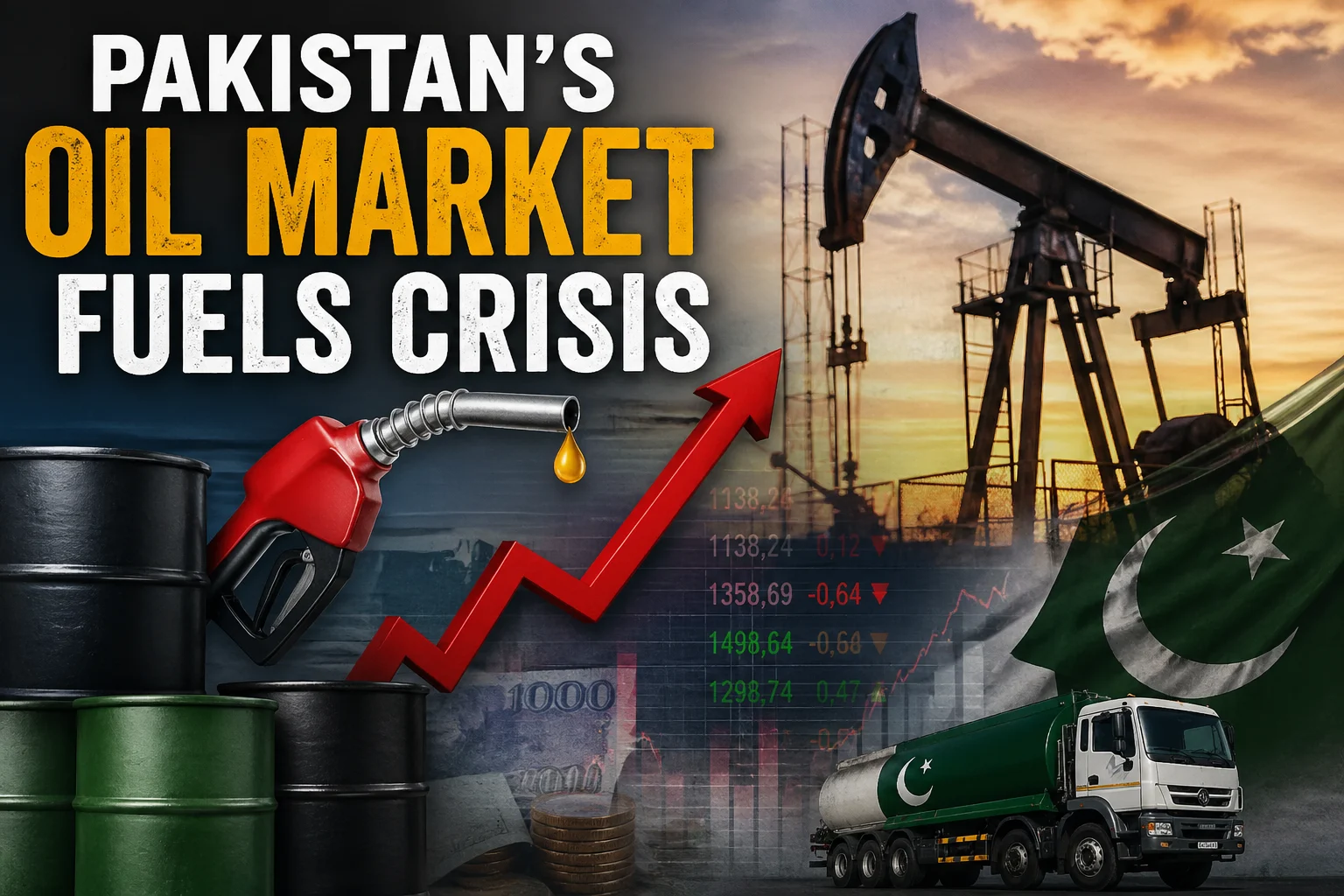
Pakistan’s Oil Market Fuels Crisis
Pakistan’s oil market Fuels Crisis is currently under severe pressure, contributing to a broader economic crisis. Rising global oil prices, supply disruptions, and weak domestic policies have created a situation where fuel costs are rapidly increasing, affecting every sector of the economy. The Current Petrol price is Rs 393.35 per liter with the increase of Rs26.77 per liter because the our country Pakistan relies heavily on imported oil which make it extremely vulnerable to global shock and geopolitical tensions.
Why Pakistan’s oil market Fuels Crisis
Heavy Dependence on Imports
Pakistan imports around 90% of its oil, mainly from Gulf countries due to this the increase in Petrol and Diesel prices are common according to last update the Petrol price is Rs 393.35 per liter and Diesel price is now at Rs 380.19 per liter with increase of Rs26.77 liter which is a sharp increase for Normal Citizens. This dependence on oil makes the economy highly sensitive to international price changes and supply disruptions.
Global Conflict Impact
Recent geopolitical tensions, especially in the Middle East, have disrupted oil supply routes like the Strait of Hormuz which caused sharp price increases worldwide and in Pakistan it is again increasing with Rs 26.77 per liter and again it is expected that it will rise by sharp increase in Oil.
- Petrol prices rose by 63%
- Diesel increased by 75% in weeks
Inflation Surge
The Rise in fuel prices directly increase:
- Transportation costs
- Electricity tariffs
- Food prices
This leads to high inflation that makes daily life expensive for ordinary citizens.
Government Pricing Policies
Government decisions such as increasing petroleum levies and increasing oil rates , have added to the burden on consumers. In some cases, fuel prices were raised beyond international market trends, worsening public hardship.
Oil Industry Financial Crisis
Pakistan’s oil sector is also facing:
- Liquidity issues
- Delayed payments
- Risk of Rs100 billion inventory losses
This weakens the entire supply chain and increases the risk of shortages.
High Impact on Economy
Rising Cost of Living
Fuel price hikes increase:
- Transport fares
- Utility bills
- Food prices
This directly affects middle- and low-income households.
Pressure on Foreign Reserves
Higher oil import bills drain foreign exchange reserves, worsening Pakistan’s balance of payments crisis.
Industrial Slowdown
Industries face:
- Higher production costs
- Reduced profitability
- Lower output
This slows economic growth and increases unemployment.
Energy Shortages
Supply disruptions and financial constraints can lead to:
- Fuel shortages
- Power outages
- Reduced industrial activity
Recent LNG shortages and supply issues have already exposed gaps in Pakistan’s energy system.
Structural Problems in Oil Market
Weak Regulation
Lack of strong oversight allows inefficiencies and market distortions.
Circular Debt
Delayed payments between government and oil companies create financial instability.
Poor Energy Planning
Over-reliance on imported fuels instead of local or renewable energy sources continues to worsen the crisis.
Read more : Latest Update of Pakistan
Possible Solutions
Diversify Energy Sources
- Increase solar and hydropower usage
- Reduce dependence on imported oil
Improve Governance
- Transparent pricing policies
- Reduce unnecessary taxes on fuel
Strengthen Supply Chain
- Ensure timely payments to oil companies
- Improve storage and distribution systems
Promote Energy Efficiency
- Encourage public transport
- Reduce fuel wastage
Pakistan’s oil crisis is not temporary. Without structural reforms, the country will continue to face:
- Repeated fuel price shocks
- Economic instability
- Increased inflation
However, investments in renewable energy and better policies can reduce long-term risks.
FAQ’s
What is causing Pakistan’s Oil Market Fuels ?
The Pakistan’s Oil Market Fuels Crisis is caused by global oil price increases, import dependence, and weak domestic policies.
Why are fuel prices rising so fast?
Due to international conflicts, supply disruptions, and government taxes, prices are increasing rapidly.
How does oil affect inflation?
Higher fuel prices increase transport and production costs, leading to overall inflation.
Can Pakistan reduce oil dependence?
Yes, by investing in renewable energy, hydropower, and local resources.
Is the crisis temporary or long-term?
It is largely structural, meaning it will continue unless major reforms are implemented.
Conclusion
Pakistan’s oil market Fuels Crisis is not just facing a temporary shock it is fueling a deeper economic crisis. Heavy reliance on imports, global conflicts, and internal policy weaknesses have created a fragile system.
To stabilize the economy, Pakistan must focus on energy diversification, policy reforms, and reducing dependence on imported oil. Without these changes, the cycle of rising fuel prices and economic pressure will continue to affect both the economy and everyday life.