
Pashtun Culture and Traditions: A Legacy of Honor, Hospitality, and Heritage
Pashtun Culture and Traditions are most prominent people who live in Pakistan Pashtuns, also known as Pakhtuns or Pathans are one of the oldest and most prominent ethnic groups in South Central Asia which is mainly living in Pakistan and Afghanistan. With a population of over 50 million, they have preserved a rich cultural identity rooted in traditions, values, and a unique social code.Pashtun culture is deeply shaped by honor, hospitality, bravery and strong tribal bonds that make it one of the most distinctive cultures in the region.
Pashtunwali The Code of Life
At the heart of Pashtun society lies Pashtunwalithe ,Pashtun Culture and Traditions is an ancient unwritten code of conduct that governs daily life and behavior.
Key principles include:
- Nang (Honor): Protecting personal and family dignity
- Melmastia (Hospitality): Treating guests with generosity and love
- Badal (Justice/Revenge): Seeking justice when wronged
- Nanawatai (Asylum): Offering protection even to enemies and everyone
This code promotes courage, loyalty, justice and self respect which shape social interactions and tribal unity.
Language and Oral Traditions
The Pashtun Culture and Traditions or Pashto language is a central pillar of Pashtun identity. It is rich in:
- Poetry
- Proverbs
- Storytelling traditions
Famous poets like Khushal Khan Khattak and Rahman Baba have contributed significantly to Pashto literature.
Oral storytelling is especially important, as elders pass down:
- Historical events
- Tribal stories
- Moral lessons
This tradition helps preserve culture across generations without written records in Pakistan.
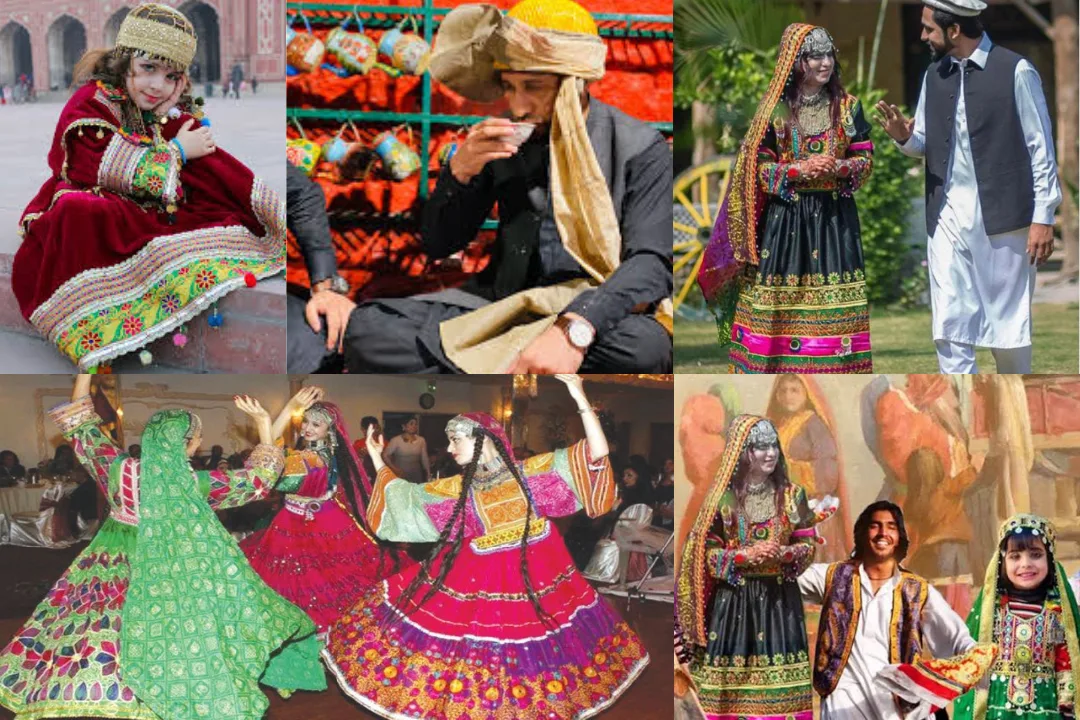
Traditional Dress
Men’s Clothing
Pashtun men traditionally wear:
- Shalwar kameez
- Waistcoat
- Turban or pakol
The turban symbolizes dignity, honor, and identity.
Women’s Clothing
Pashtun women wear:
- Colorful embroidered dresses
- Handmade traditional outfits
- Silver jewelry and ornaments
Different regions have unique embroidery styles, reflecting local identity and heritage.
Hospitality – Melmastia
Pashtun Culture and Traditions also treat people with care and love. Hospitality is one of the most admired qualities of Pashtun culture.
- Guests are treated with utmost respect
- Food, shelter, and protection are always offered
- Even strangers are welcomed warmly
Providing hospitality is considered a moral and social obligation and a host’s reputation depends on how well they treat their guests.
Read more : Punjabi Culture of Pakistan
Festivals and Ceremonies
Pashtuns celebrate religious and cultural events with enthusiasm.
Religious Festivals
- Eid-ul-Fitr
- Eid-ul-Adha
These occasions include:
- Family gatherings
- Charity and sharing food
- Wearing traditional clothes
Weddings
Pashtun weddings are grand and multi-day events featuring:
- Nikah ceremony
- Music and traditional instruments (dhol, rubab)
- Traditional dance like Attan
The Attan dance is a powerful cultural expression performed in circles with rhythmic movements.
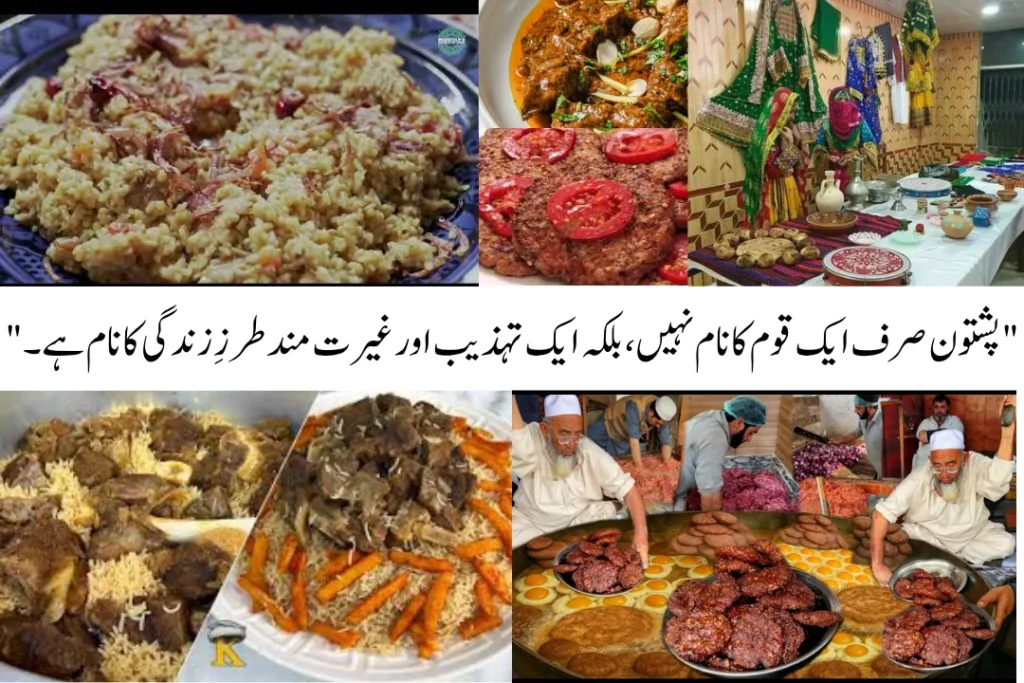
Cuisine – A Taste of Pashtun Culture and Traditions
Pashtun Culture and Traditions is simple yet flavorful and deeply connected to hospitality.
Popular dishes include:
- Kabuli Pulao (rice with meat, carrots, raisins)
- Chapli Kebab
- Roghani Naan
- Mantu (dumplings)
- Sheer Yakh (dessert)
Food is often cooked with care using traditional methods like clay ovens and wood fires.
Social Values and Traditions
Pashtun society is built on strong moral and social values:
- Respect for elders is mandatory
- Family and tribal loyalty is essential
- Decisions are often made through Jirga (council of elders)
- Honor and reputation define social standing
Kinship and tribal structure play a key role in maintaining order and unity.
Read more : latest news about Pakistan
The Role of Honor in Society
Honor is central to Pashtun identity.
It includes:
- Truthfulness
- Courage
- Protecting family dignity
- Standing by commitments
Maintaining honor often requires sacrifice and shapes both personal and community behavior.
Conclusion
Pashtun Culture and Traditions is a powerful blend of tradition, honor, and resilience. Rooted in Pashtunwali, it continues to guide social life, even in modern times. From hospitality and poetry to dress and cuisine, every aspect reflects a deep sense of identity and pride. Despite modernization, Pashtuns have successfully preserved their heritage, making their culture a timeless legacy of strength and unity.
FAQ’s
What is Pashtunwali?
Pashtun Culture and Traditions is an ancient code of conduct that defines honor, hospitality, justice, and social behavior in Pashtun society.
Why is hospitality important in Pashtun culture?
Hospitality (Melmastia) is important in Pashtun Culture and Traditions because it is considered a moral duty and guests are treated with respect and generosity.
What language do Pashtuns speak?
Pashtuns primarily speak Pashto which is a language rich in poetry and oral traditions.
What is the Attan dance?
Attan is a traditional Pashtun dance performed in circles during celebrations like weddings.
What are common Pashtun foods?
Popular dishes include Kabuli Pulao, Chapli Kebab and Roghani Naan.