
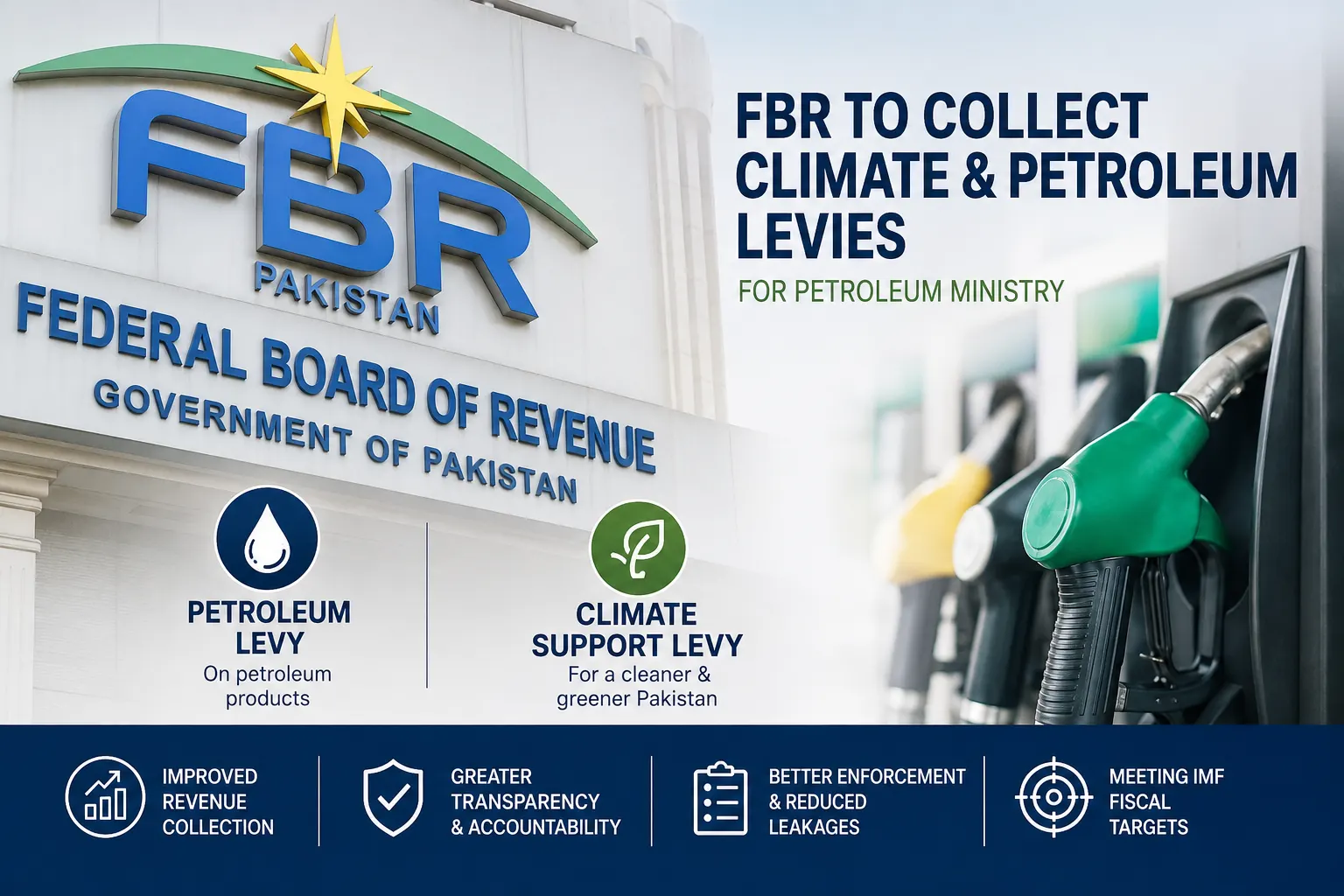
FBR to Collect Climate & Petroleum Levies
Pakistan’s taxation system is undergoing another major shift as the government plans to empower the Federal Board of Revenue FBR to Collect Climate & Petroleum Levies and climate support levy on behalf of the Petroleum Division. This move is part of broader fiscal reforms aimed at increasing revenue and meeting international financial commitments, particularly with the IMF.
Key Development
- The government is transferring the collection authority of petroleum and climate levies to FBR.
- Previously, these levies were managed through the Petroleum Division and pricing mechanism.
- The change is expected to improve transparency, enforcement, and revenue tracking.
What is Petroleum Levy?
FBR to Collect Climate & Petroleum Levies which is imposed by the government to charge on fuel products such as petrol and diesel. It is one of the largest sources of non-tax revenue in Pakistan.
- Petrol levy currently exceeds Rs. 100 per litre in many cases
- Total annual target is around Rs. 1.46 trillion
This shows how critical fuel taxes are for Pakistan’s economy.
Expected Upcoming Petroleum prices
According to informed sources based on existing tax rates the ex-depot price of high-speed diesel is expected to decline by about Rupees 10.40 per litre. However petrol prices are likely to change as the estimated increase of Rupees 6.25 per litre.
Petroleum Prices
| Fuel | Current price | Expected price |
| Petrol | 399.86 | +405.25 |
| Diesel | 399.58 | -369.65 |
| Kerosene oil | 192.86 | 180.36 |
| Light Speed Diesel | 173.77 | 162.77 |
Read more : Expected fuel prices May 2026 in Pakistan
Climate Carbon Levy
The climate or carbon levy is an environmental tax introduced to:
- Reduce carbon emissions
- Promote cleaner energy
- Fund climate-related projects
- Currently around Rs. 2.5 per litre which is expected to increase to Rs. 5 per litre in future
Aim of FBR Taking Over
The shift to FBR to Collect Climate & Petroleum Levies aims to:
Improve Revenue Collection
FBR has better infrastructure for tax collection and enforcement, which may reduce leakages.
Meet IMF Targets
Pakistan is under pressure to increase revenue and maintain fiscal discipline under IMF programs.
Better Accountability
Centralizing collection ensures proper auditing and tracking of funds.
Impact on Fuel Prices
- Consumers are already paying over Rs. 120–150 per litre in taxes and levies
- Any increase in levies directly raises petrol and diesel prices
- Diesel price hikes can increase the Transport costs and increase the Food prices.
Economic Significance
- Petroleum levy alone contributes trillions in revenue annually
- Helps government to Reduce budget deficit and Fund subsidies and also help in to Support energy sector
However it also puts a heavy burden on consumers.
Read more : How to apply for Rahmat Card 2026 required documents
Challenges & Concerns
- Rising fuel prices may increase inflation
- Public backlash due to high taxation
- Dependence on indirect taxes instead of broad tax base
Conclusion
The decision to allow FBR to Collect Climate & Petroleum Levies is a major structural reform in Pakistan’s tax system. While it may improve revenue efficiency and transparency, it also highlights the government’s increasing reliance on fuel taxes. The real challenge will be balancing revenue generation with public relief.
FAQ’s
What is the petroleum levy in Pakistan?
It is a tax imposed on petroleum products like petrol and diesel to generate government revenue.
What is the climate support levy?
A tax on fuel aimed at reducing carbon emissions and funding environmental projects.
How much tax is included in petrol price?
There is around about Rs. 120 to Rs 150 per litre made up of taxes, levies, and duties.
Why is FBR collecting these levies?
To improve transparency, increase revenue, and meet IMF fiscal targets.
Will petrol prices increase further?
Yes, if levies increase or global oil prices rise, fuel prices may go higher.
How does petroleum levy affect inflation?
Higher fuel prices increase transport and production costs, leading to overall inflation.