
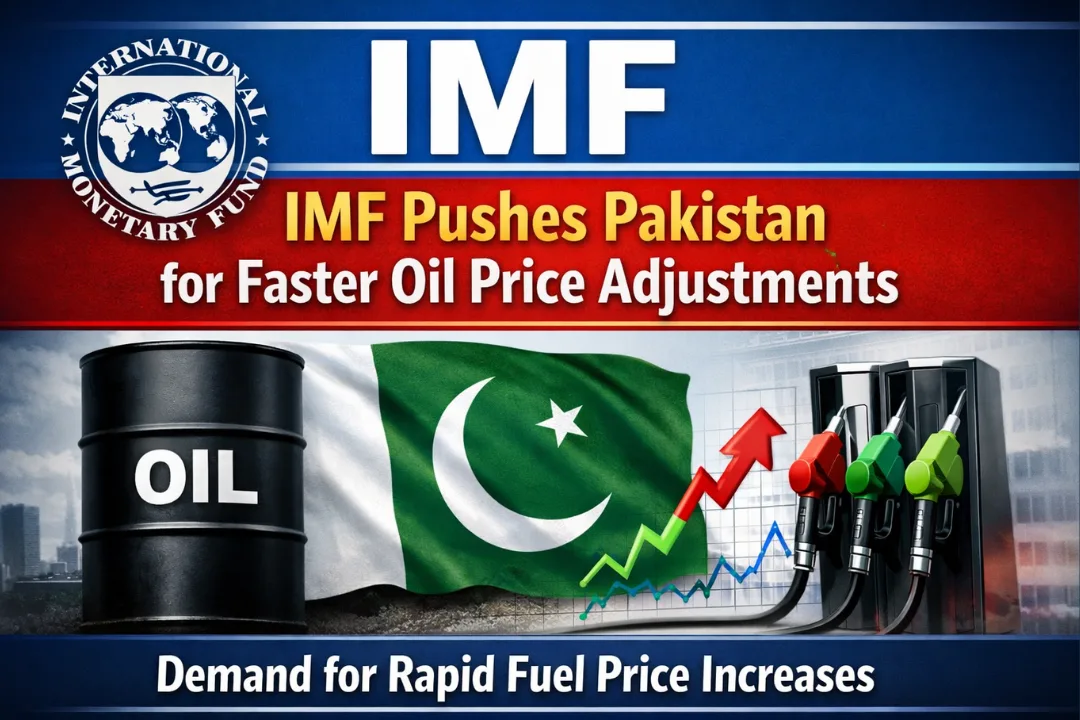
IMF Pushes Pakistan for Faster Oil Price Adjustments
The International Monetary Fund (IMF) has shared the Memorandum of Economic and Financial Policies with Pakistani authorities as part of ongoing negotiation for financial support and these discussions focus on Pakistan’s 2026–27 budget framework, tax targets and crucial reforms in petroleum prices.
IMF and Pakistan Budget Talks 2026–27
Pakistan and the IMF are working toward a staff-level agreement for the third review under the $7 billion Extended Fund Facility that along with $1.4 billion under the Resilience and Sustainability Facility.
- Proposed FBR tax target: Rs 15.08 trillion
- Revised current year target: Rs 13.4 trillion (down from Rs 13.79 trillion)
- Focus on improving revenue collection and fiscal discipline
The IMF has emphasized a clear and transparent fiscal framework to stabilize Pakistan’s economy .
Read more : Upcoming Petroleum prices expected to increase from next week
Pressure to Increase Fuel Price Adjustments
One of the IMF’s major recommendations is frequent revision of petroleum prices.
- Pakistan already shifted from fortnightly to weekly price adjustments
- IMF is pushing for even faster changes
- Possible options under discussion:
Twice a week
Daily adjustments
This move aims to align local fuel prices with global market trends and reduce subsidy burden.
Impact of Global Oil Market and Middle East Conflict
The Pakistan Institute of Development Economics (PIDE) has raised serious concerns about external risks.
Key Risks Identified:
- Ongoing Middle East tensions creating global economic shocks
- Heavy reliance on oil imports through the Strait of Hormuz
Potential Economic Impact:
- Exports to GCC may drop by $1.5–$2 billion
- Oil import bill could rise by $4.5 billion
- Trade deficit may increase from $24 billion to $41.8 billion
- Inflation could rise from 7.1% to 11.1%
Energy Dependency Challenges
Pakistan’s economy remains vulnerable due to its reliance on imported energy:
- 81.6% of energy imports pass through the Strait of Hormuz
- Rising oil prices increase:
Transportation costs
Electricity tariffs
Overall inflation
This dependency highlights the urgent need for energy diversification and reforms.
Government Strategy and Negotiations
IMF Pushes Pakistan for Faster Oil Price Adjustments and the Pakistani authorities are currently negotiating with the IMF on:
- The frequency of fuel price adjustments
- Measures to protect low and middle-income groups
- Balancing economic stability with public relief
The government aims to avoid sudden shocks while meeting IMF conditions.
Read more : Fuel prices in Faisalabad today
Conclusion
Pakistan’s ongoing talks with the IMF reflect the country’s tight economic situation and dependence on external financing So IMF Pushes Pakistan for Faster Oil Price Adjustments may improve fiscal stability but could also increase inflation and public pressure. At the same time, global uncertainties especially in the Middle East pose serious risks to Pakistan’s economy and careful policy decisions will be essential to balance economic reforms with social protection.
FAQ’s
Why is the IMF Pushes Pakistan for Faster Oil Price Adjustments ?
The IMF Pushes Pakistan for Faster Oil Price Adjustments wants to align fuel prices with the international market to reduce subsidies and fiscal deficits.
What is the current petroleum price adjustment system in Pakistan?
Pakistan recently moved from fortnightly to weekly price revisions, but further changes are under discussion.
What is the FBR tax target for 2026–27?
The IMF has proposed target of Rs 15.08 trillion.
How will rising oil prices affect Pakistan?
Higher oil prices can increase:
- Inflation
- Import bills
- Trade deficit
What role does the Strait of Hormuz play for Pakistan?
It is a critical route, as over 81% of Pakistan’s energy imports pass through it.
What are the risks from the Middle East conflict?
It may disrupt oil supply, increase shipping cost and reduce exports to Gulf countries.