
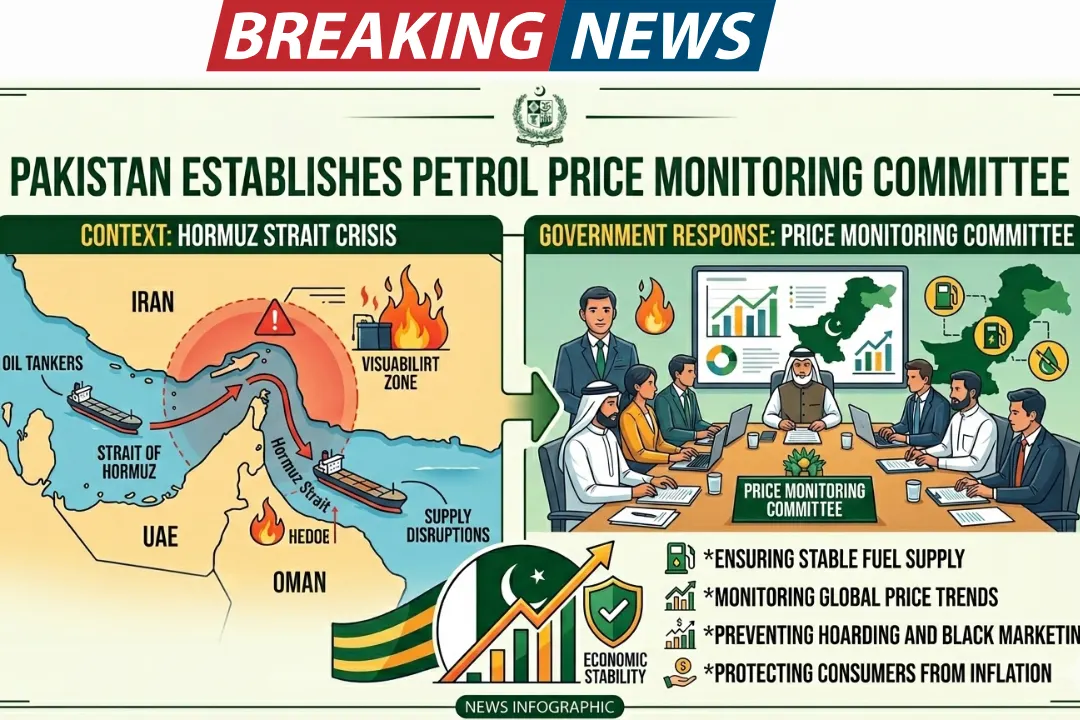
Pakistan Sets Up Petrol Price Monitoring Committee Amid Hormuz Crisis
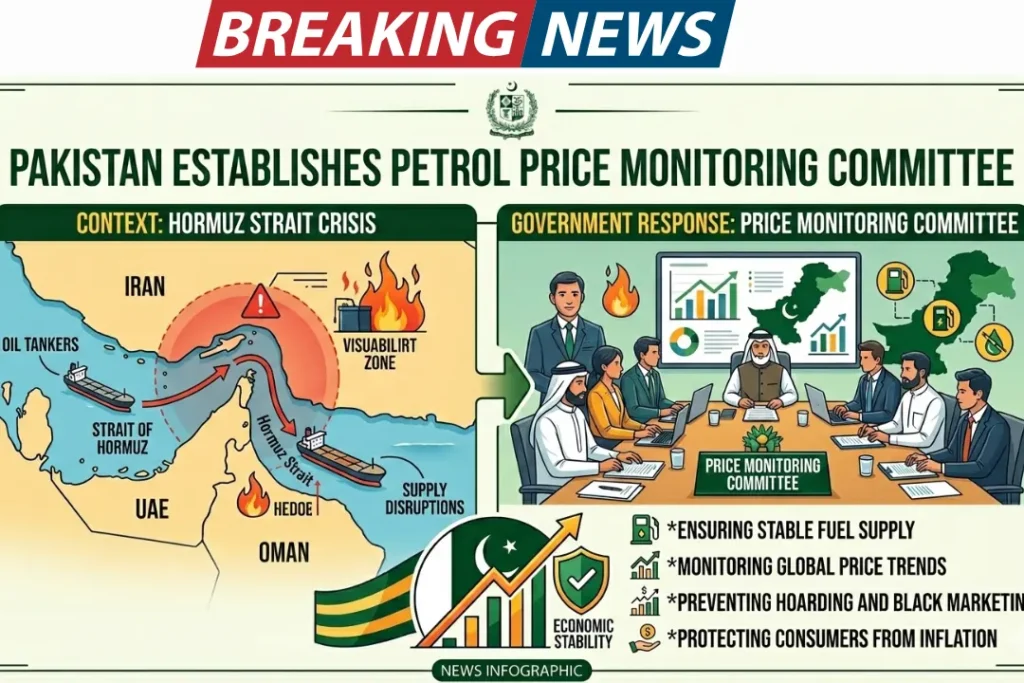
Pakistan has established high level cabinet body to closely monitor petroleum market and safeguard domestic fuel supplies as tension in the Middle East disrupt global energy trade routes and The move come after Iran reportedly closed the Strait of Hormuz following US – Israeli strikes that raising concern about global oil shipments and price volatility and newly formed committee about it aims to ensure uninterrupted fuel availability across Pakistan while preparing for potential economic and supply chain risk.
High-Level Cabinet Committee Established
The Finance Division announced the creation of the “Committee to Monitor Petrol Prices in the Wake of the Emerging Situation in the Region.”
The committee held its first meeting under Finance Minister Senator Muhammad Aurangzeb, reviewing fuel stocks, global pricing trends, freight costs, and possible foreign exchange risks.
According to the ministry, the committee will:
- Monitor international petroleum price movements
- Review domestic fuel stock levels
- Assess foreign exchange exposure
- Evaluate shipping and alternate sourcing options
- Conduct structured scenario planning
The government emphasizes that ensuring nationwide energy availability remains its top priority.
Read more : Government of Pakistan increase fuel prices
Strait of Hormuz Closure Raises Global Concerns
The Strait of Hormuz is one of the world most critical oil transit chokepoints and Roughly one fifth of global oil consumption passes through this strategic waterway and Pakistan heavily depend on Middle Eastern crude oil and petroleum products that transit through the strait and Any prolonged disruption could:
- Reduce global oil supply
- Trigger sharp price increases
- Increase freight and insurance costs
- Pressure Pakistan import bill and foreign reserves
Officials also note that tension near the Bab Al-Mandeb Strait could further complicate global shipping routes.
No Immediate Supply Stress: Government Assures
Despite rising global tension authorities have confirmed that there is currently no immediate fuel shortage in Pakistan.
The Oil and Gas Regulatory Authority (OGRA) confirmed that:
- Pakistan has 28 days supply of petrol and diesel in stock
- Inventory level are above mandatory reserve requirement
An energy ministry official stated that petroleum stocks are sufficient to last over one month while Pakistan State Oil (PSO) reports maintaining a healthy stock level across the country.
The Finance Minister directed relevant departments to:
- Intensify coordination
- Validate physical stock positions
- Closely track shipments and storage
The committee will now meet daily to monitor developments in real time.
Read more : PM Ramadan Relief Package Rs 13000 Payment 2026 with complete guide and details
Economic and Inflation Risks if Crisis Prolongs
Analysts warn that prolonged disruption in the Strait of Hormuz could significantly impact the global oil market.
Potential risks for Pakistan include:
- Increased oil import bill
- Pressure on foreign exchange reserve
- Higher freight and war risk insurance premium
- Inflationary pressure on domestic fuel prices
Shankar Terleja of Topline Securities notes that sustained disruption could trigger a sharp global price spike and similarly Ahsan Mehanti of Arif Habib Commodities describes the strait as “highly critical” to Pakistan’s energy supply security.
Business Community Calls for Contingency Planning
The Federation of Pakistan Chamber of Commerce and Industry urged the government to prepare a contingency plan to ensure supply chain continuity.
Business leaders highlights concerns that regional instability may:
- Disrupt trade routes
- Increase shipping costs
- Impact industrial production
They have called for immediate policy measures to secure petroleum supplies and stabilize the market.
Why This Development Matters for Pakistan
Pakistan Sets Up Petrol Price Monitoring Committee Amid Hormuz Crisis as Pakistan economy remain sensitive to global oil price movement and A sustained rise in petroleum prices could:
- Increase transportation and electricity costs
- Push inflation higher
- Slow industrial activity
- Widen the current account deficit
By forming a dedicated monitoring committee the government aims to act proactively rather than reactively.
Conclusion
Pakistan Sets Up Petrol Price Monitoring Committee Amid Hormuz Crisis and decision to establish a high level petroleum monitoring committee that reflect growing concerns over global energy security amid Middle East tension and While authorities have assured that current fuel stocks remain adequate the closure of the Strait of Hormuz poses potential risks to global oil supply and price stability.