
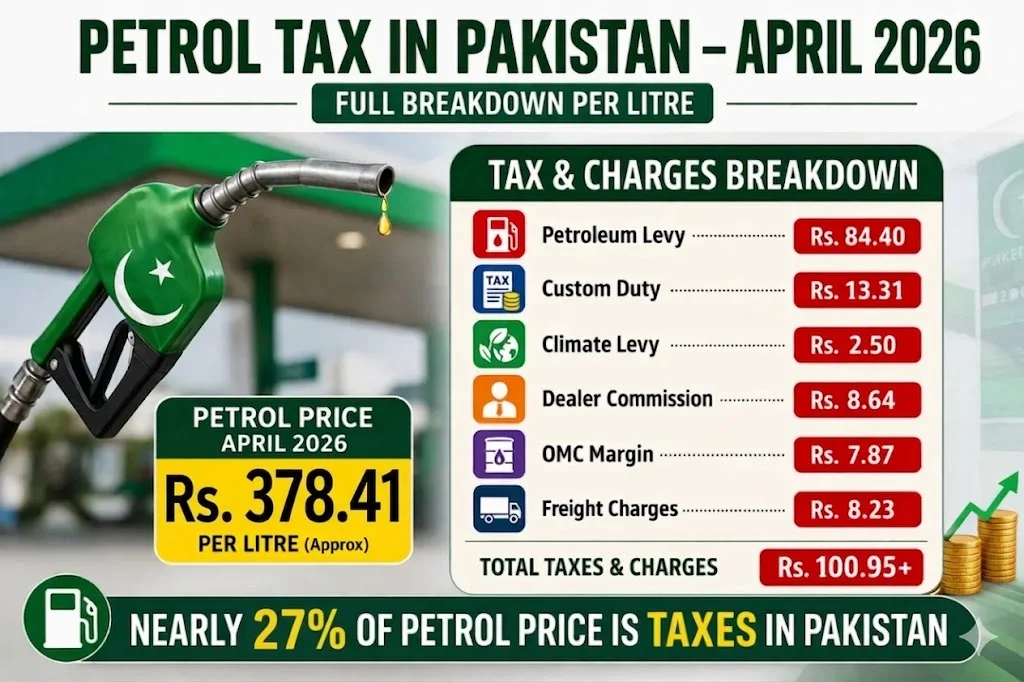
Petrol Tax in Pakistan April 2026 Full Breakdown
With petrol prices crossing Rs 378.41 per litre in April 2026, a major portion of what Pakistanis pay is actually taxes and government charges rather than the actual fuel cost. According to data from Oil and Gas Regulatory Authority (OGRA) and recent reports, consumers are paying over Rs 100 per litre in taxes, making fuel significantly more expensive.
Total Tax on Petrol Per Litre (April 2026)
Pakistanis are currently paying approximately about :
- Rs 100 to 105 per litre in total taxes
This includes multiple charges imposed by the government, even though General Sales Tax (GST) is currently zero on petrol.
Complete Tax Breakdown
Here is the Petrol Tax in Pakistan April 2026 Full Breakdown latest estimated breakdown per litre :
Petroleum Development Levy (PDL)
- Around about Rs 85 to Rs 105 per litre
- Biggest tax component
- Main revenue source for government
Climate Support Levy (CSL)
- It is Around about to Rs 2.50 per litre
- Added for environmental and climate-related funding
Customs Duty
- Around Rs 13 per litre
- It is Applied on imported petroleum products
General Sales Tax (GST)
- Currently 0% (as per government policy)
- Previously applied but temporarily removed
Dealer Commission & Margins
- Around Rs 8 to Rs 9 per litre
- Paid to petrol pump owners
Inland Freight Equalization Margin (IFEM)
- Around Rs 8 to 10 per litre
- Covers transportation cost across Pakistan
Why Taxes Are So High in 2026
Petrol Tax in Pakistan April 2026 Full Breakdown and Several factors explain the heavy tax burden:
- Government reliance on petroleum levy for revenue
- Pressure from IMF to increase tax collection
- Rising global crude oil prices (above $110/barrel)
- Weak Pakistani rupee is increasing the import costs
Read more : Government of Pakistan announce Petrol subsidy for Motorbikes of Rs 100 liter on 20 Liters monthly
Real Cost vs Tax Key Insight
- Actual fuel cost (ex-refinery): ~60–65%
- Taxes & charges: ~35–40% of petrol price
This means a significant portion of what consumers pay is not fuel, but taxes
Impact on Public
- Higher fuel prices result the increased in transport costs
- Inflation rises across food and daily items
- More financial pressure on middle and lower class
- Businesses face higher operating costs
Conclusion
Petrol Tax in Pakistan April 2026 Full Breakdown petrol prices in Pakistan were not just driven by global crude oil rates but also by heavy taxation. With over Rs 100 per litre going towards taxes and levies, consumers are paying significantly more than the base fuel cost. As long as international oil prices remain high and government revenue depends on petroleum levies, fuel prices in Pakistan are expected to stay elevated.