
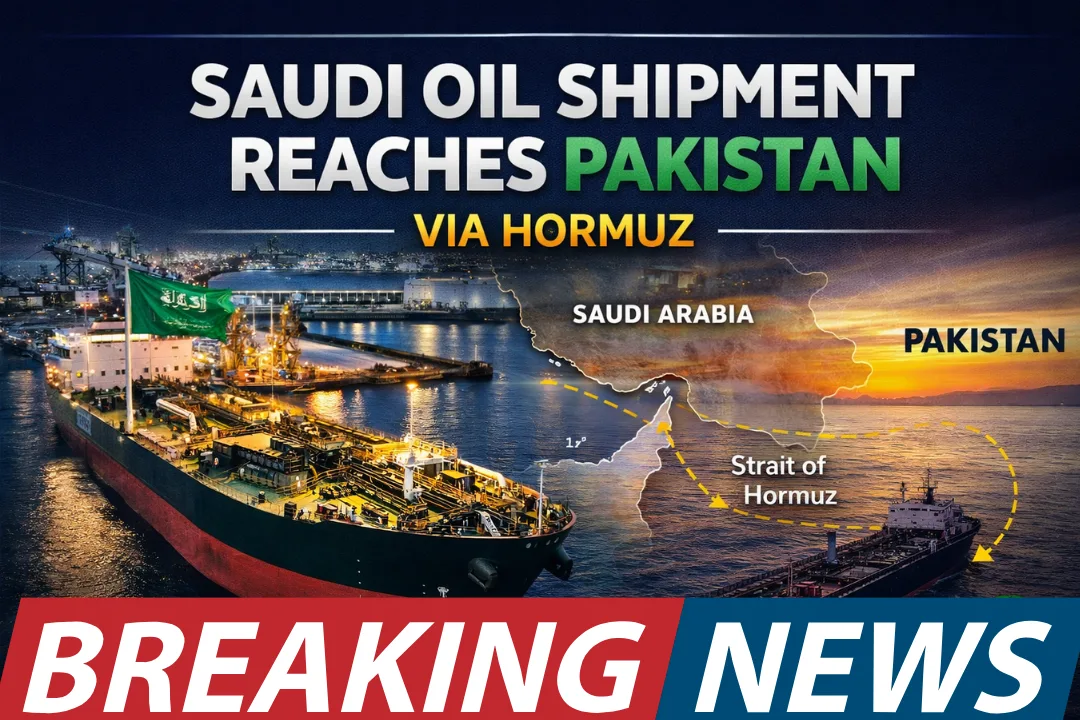
Saudi Oil Shipment Reaches Pakistan via Hormuz
In a significant development amid ongoing Middle East tensions Saudi Oil Shipment Reaches Pakistan via Hormuz carrying 650,000 barrels of crude oil is heading to Pakistan through the strategically vital Strait of Hormuz and This shipment comes despite restricted maritime traffic that highlighting Pakistan’s continued efforts to secure energy supplies during a global oil disruption.
Shipment Details
According to recent reports Saudi Oil Shipment Reaches Pakistan via Hormuz the oil tanker P. Aliki is transporting approximately 650,000 barrels of Saudi crude oil to Pakistan and The vessel successfully transited through the Strait of Hormuz, one of the world’s most critical oil routes and The shipment is considered one of few successful oil movements in recent days
Only seven vessels exited the Gulf during the same period which included:
- 1 crude oil tanker
- 2 LPG carriers
- 4 bulk carriers
This limited activity reflects the ongoing restrictions and security concerns in the region.
Restricted Traffic in Hormuz
The Strait of Hormuz has witnessed severely reduced shipping activity due to geopolitical tension and conflict in the Middle East.
- Shipping traffic has dropped significantly
- Many vessels are avoiding the route due to security risk and high insurance cost
- Only selected ships are being allowed the passage under strict controls
Despite these challenges, some countries like Pakistan are still managing to receive oil shipments through negotiated or limited access.
Why the Strait of Hormuz Matters
The Strait of Hormuz is one of the most important energy corridors in the world:
- Handles large portion of global oil supply
- Connect Gulf oil producers to international market
Any disruption directly impacts fuel prices worldwide
Recent tensions have made it one of the most high risk maritime zones globally.
Impact on Pakistan
Pakistan relies heavily on imported oil, with a major portion passing through the Strait of Hormuz.
- This shipment help to stabilize short term fuel supply
- Ensure continued availability of petroleum products
- Reduce immediate pressure on the energy sector
However, ongoing disruptions could still lead to:
- Fuel price increase
- Supply shortage
- Economic pressure
Read more : Upcoming Petrol price in Pakistan from 1st April 2026
Alternative Routes and Challenges
Due to risks in Hormuz Saudi Arabia has also explored alternative routes like the Red Sea pipeline. However:
- These routes have limited capacity
- Cannot fully replace Hormuz shipments
- Supply chains remain under stress
Global Oil Market Impact
The restricted flow of oil has already:
- Increase global oil price volatility
- Raise transportation and fuel cost
- Create uncertainty in energy importing countries
Experts warn that continued disruption could lead to further economic challenges worldwide.
Conclusion
The Saudi Oil Shipment Reaches Pakistan via Hormuz arrival of 650,000 barrels is crucial development amid ongoing geopolitical tensions and it provides temporary relief to Pakistan. The fragile situation highlights Pakistan’s vulnerability to global energy disruption and the urgent need for diversified supply routes.
FAQ’s
How much Saudi Oil Shipment Reaches Pakistan via Hormuz in this shipment?
Saudi Oil Shipment Reaches Pakistan via Hormuz is receiving approximately 650,000 barrels of crude oil from Saudia.
Why is the Strait of Hormuz important?
It is a key global oil transit route connecting Gulf countries to international markets.
Is shipping through Hormuz safe right now?
Shipping is restricted and risky due to ongoing regional tensions.
Will petrol prices increase in Pakistan?
If disruptions continue, fuel prices may rise due to limited supply.
Are there alternative routes for oil supply?
Yes, but they are limited and cannot fully replace Hormuz shipments.