
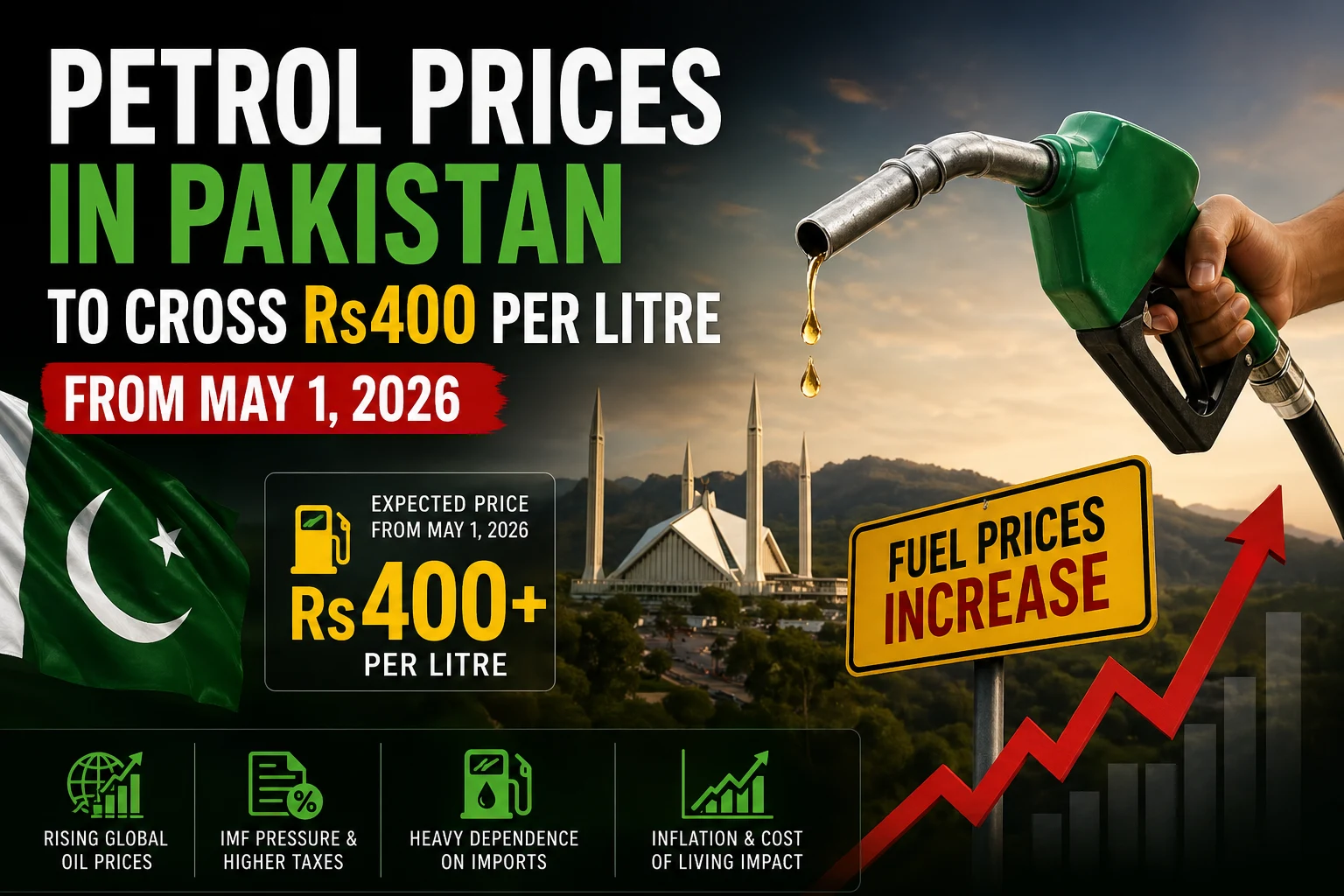
Upcoming Petrol price from 1st May 2026 Expected to increase
Pakistan is once again facing the threat of a major fuel price hike. Reports suggest that petrol prices may cross the Rs400 per litre mark from May 1, 2026 which creates Upcoming Petrol price from 1st May 2026 Expected to increase with serious concerns for citizens already struggling with inflation. This potential increase could have widespread effects on transportation, daily expenses, and the overall economy.
Current Petrol Prices in Pakistan
As of late April 2026, petrol prices have already reached extremely high levels. The current rates are:
- Petrol: Rs393.35 per litre
- High-Speed Diesel: Rs380.19 per litre
These prices were recently increased by nearly Rs27 per litre, putting additional pressure on the public.
| Fuel | Price |
| Petrol | 393.35 |
| High Speed Diesel | 380.19 |
| Light Speed Diesel | 159.76 |
| Kerosene Oil | 467.48 |
Global Oil Prices
| WTI Crude | 103.94 | +4.01 |
| Brent Crude | 115.93 | +4.67 |
| Murban Crude | 109.31 | +2.61 |
| Natural Gas | 2.635 | -0.056 |
| Gasoline | 3.677 | +0.116 |
Prime Minister Shehbaz Sharif confirm the news that revised petroleum product prices will be expected to announced on Friday. He acknowledged the difficult balancing act his government faces, citing volatile international oil trends and rising fiscal constraints. However, he assured that the final decision would still take public interest into account.
Why Petrol Prices Are Increasing
Upcoming Petrol price from 1st May 2026 Expected to increase Several key factors are driving this expected increase:
1. Rising Global Oil Prices
International crude oil prices have surged significantly, with Brent crude hovering around $115 per barrel. This directly impacts Pakistan so Upcoming Petrol price from 1st May 2026 Expected to increase, which heavily relies on imported fuel.
2. IMF Pressure and Government Policies
Pakistan is under pressure to meet IMF targets, leading to possible increases in petroleum levies and taxes. These additional charges are a major component of fuel prices.
3. Heavy Dependence on Imports
Pakistan imports around 80–85% of its petroleum needs. Any global price fluctuation immediately affects local fuel rates.
Read more : 1st May 2026 local Holiday in Pakistan
Expected Petrol Price from May 1, 2026
According to reports, Upcoming Petrol price from 1st May 2026 Expected to increase petrol prices could exceed Rs400 per litre in the upcoming revision. The final decision is expected to be announced by the government, keeping both economic pressures and public reaction in mind.
Impact on Inflation
If petrol crosses Rs400, the impact will be significant:
- Transport fares will increase
- Prices of essential goods will rise
- Businesses will face higher operating costs
- Overall inflation will worsen
Experts warn that such an increase could trigger another wave of economic hardship for the public.
Economic Challenges Behind the Crisis
Pakistan’s economy is already under strain due to:
- High inflation
- Currency depreciation
- Rising import bills
- Global geopolitical tensions affecting oil supply
All these factors combined are making fuel prices unstable and unpredictable.
Read more : 15 Holidays in May 2026 is expected for Pakistan Schools
What Can Happen Next?
The government may consider:
- Adjusting petroleum levy
- Providing limited relief or subsidies
- Revising fuel prices based on global trends
However, any relief is likely to be temporary given the global situation.
Conclusion
Upcoming Petrol price from 1st May 2026 Expected to increase with expected rise of petrol prices beyond Rs400 per litre highlights the seriousness of Pakistan’s economic challenges. With global oil markets remaining volatile and domestic pressures increasing, citizens may need to prepare for further financial strain. The coming days will be crucial as the government announces its final decision, which will directly impact millions of Pakistanis.