
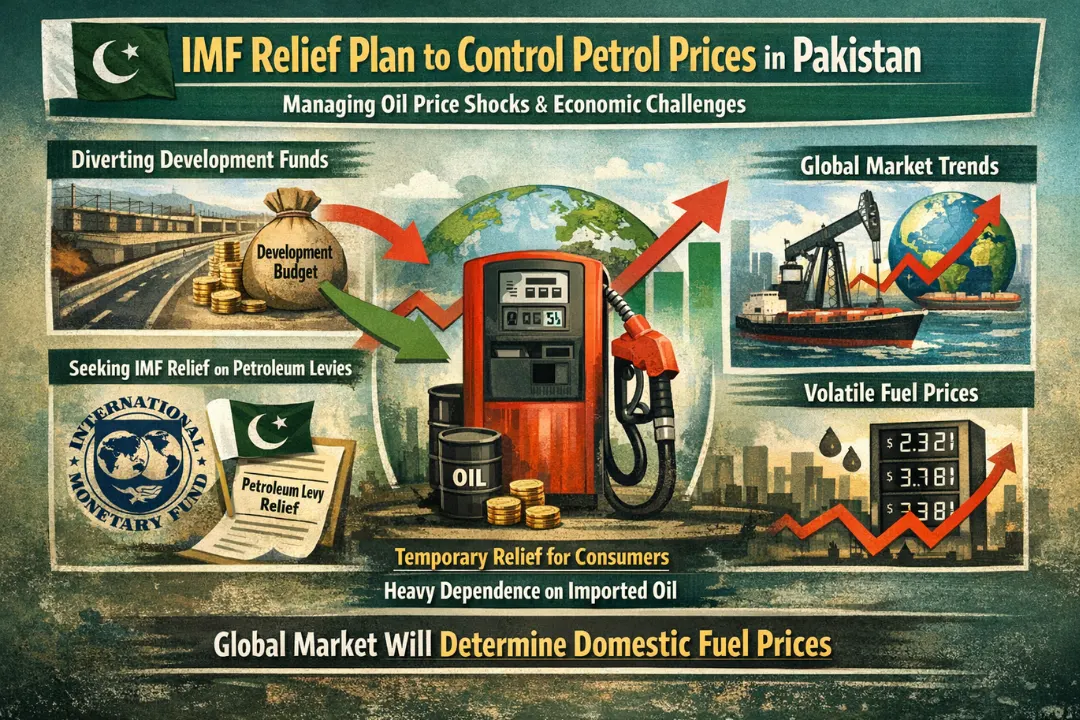
IMF Relief Plan to Control Petrol Prices
Pakistan IMF Relief Plan to Control Petrol Prices which government is considered as a major financial measure to protect citizens from the impact of rising global oil price and Official are exploring option such as diverting development fund and seeking flexibility from the International Monetary Fund on petroleum taxes to manage potential fuel price shocks in the coming month and These discussion come at time when international oil market are highly volatile due to geopolitical tension in the Middle East which have already forced Pakistan to significantly increase domestic fuel price.
Petrol and Diesel Prices Rise in Pakistan
Recently, the IMF Relief Plan to Control Petrol Prices as the government announced a sharp increase in fuel prices because of rising global oil costs and the Petrol price were increase by Rs55 per litre that bringing the price to Rs321.17 per litre while high speed diesel reach at Rs335.86 per litre and the hike was described as unavoidable due to global market pressures and supply uncertainties caused by regional conflicts affecting oil supply routes and the Higher fuel prices often lead to:
- Increased transportation costs
- Rising prices of essential goods
- Higher inflation across the economy
Read more : Upcoming Petrol and Diesel price in Pakistan is expected to increase by Rs 32 per Liter
Government Considering Development Budget Diversion
One of the key proposals being discussed is diverting part of the federal development (uplift) budget to help cover the additional cost of oil imports if international prices continue to rise and this strategy could help the government absorb some of the financial burden instead of passing the entire cost on to consumers and the Officials believe this measure could:
- Stabilize fuel prices temporarily
- Protect consumer from sudden price spikes
- Reduce inflationary pressure on the economy
However diverting development funds could also slow down infrastructure and public sector projects.
Pakistan May Seek IMF Relief on Petroleum Levy
IMF Relief Plan to Control Petrol Prices which the government is considering major financial measures to protect citizens from the impact of rising global oil prices and officials are exploring options such as diverting development funds and seeking flexibility from the International Monetary Fund (IMF) on petroleum taxes to manage potential fuel price shocks in the coming months.
These discussions come at a time when international oil markets are highly volatile due to geopolitical tensions in the Middle East, which have already forced Pakistan to significantly increase domestic fuel prices.
Read more : Government announces Holidays in Pakistan Schools Colleges and Universities from 10 March 2026 to 31 March 2026
Another option under consideration is to requesting the IMF to provide flexibility that regarding petroleum taxes which are particularly petroleum development levy (PDL) and The government may argue that the current surge in global oil price is due to external factor such as war and geopolitical tension which are beyond Pakistan control and If the IMF allows relief on the petroleum levy:
- Fuel prices could be partially stabilized
- The government could reduce tax pressure on petrol and diesel
- Consumer may avoid further large price hike
Rising Oil Prices Could Increase Import Bill
Pakistan imports most of its petroleum products that make the country vulnerable to global price fluctuations and analysts warn that surging crude prices could push Pakistan monthly oil import bill to around $600 million that put additional pressure on foreign reserves and the national economy and This situation may also:
- Increase the current account deficit
- Put pressure on the Pakistani rupee
- Lead to further inflation in the country
Government Monitoring Global Oil Market in Pakistan
The federal government is closely monitoring international oil market and regional development and Official say the priority is to ensure uninterrupted fuel supply while minimizing the financial impact on citizens and
Authorities are evaluating multiple policy options so that if oil prices continue to surge globally the government can respond quickly without transferring the full burden to the public.
Economic Impact of Rising Fuel Prices
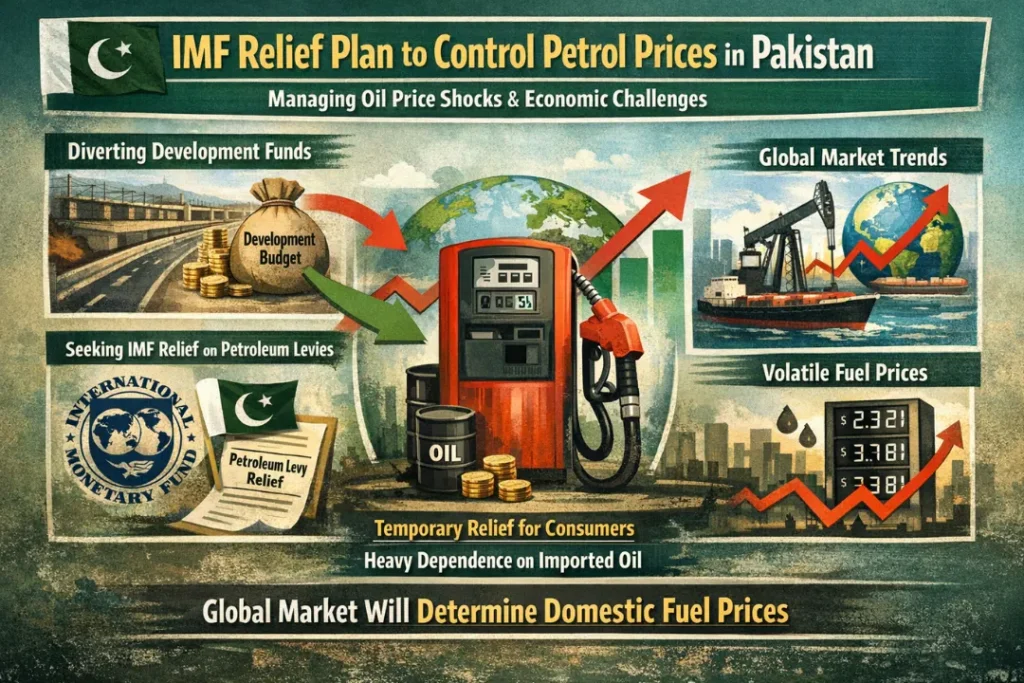
Higher petroleum prices directly affect Pakistan economy and Fuel cost influence almost every sector that include transportation, agriculture, manufacturing and electricity production and If the global oil prices remain high:
- Inflation may increase
- Transport fares may rise
- Food and commodity prices may go up
- Economic growth could slow
For this reason, policymakers are trying to balance fiscal stability with relief for citizens.
Conclusion
The IMF Relief Plan to Control Petrol Prices in Pakistan by exploring several strategies to protect its economy from potential oil price shocks and diverting funds from the development budget and seeking IMF relief on petroleum levies are among the key options under discussion. While these measures could provide temporary relief to consumers, the country’s heavy dependence on imported oil means global market trends will continue to play a major role in determining domestic fuel price.