
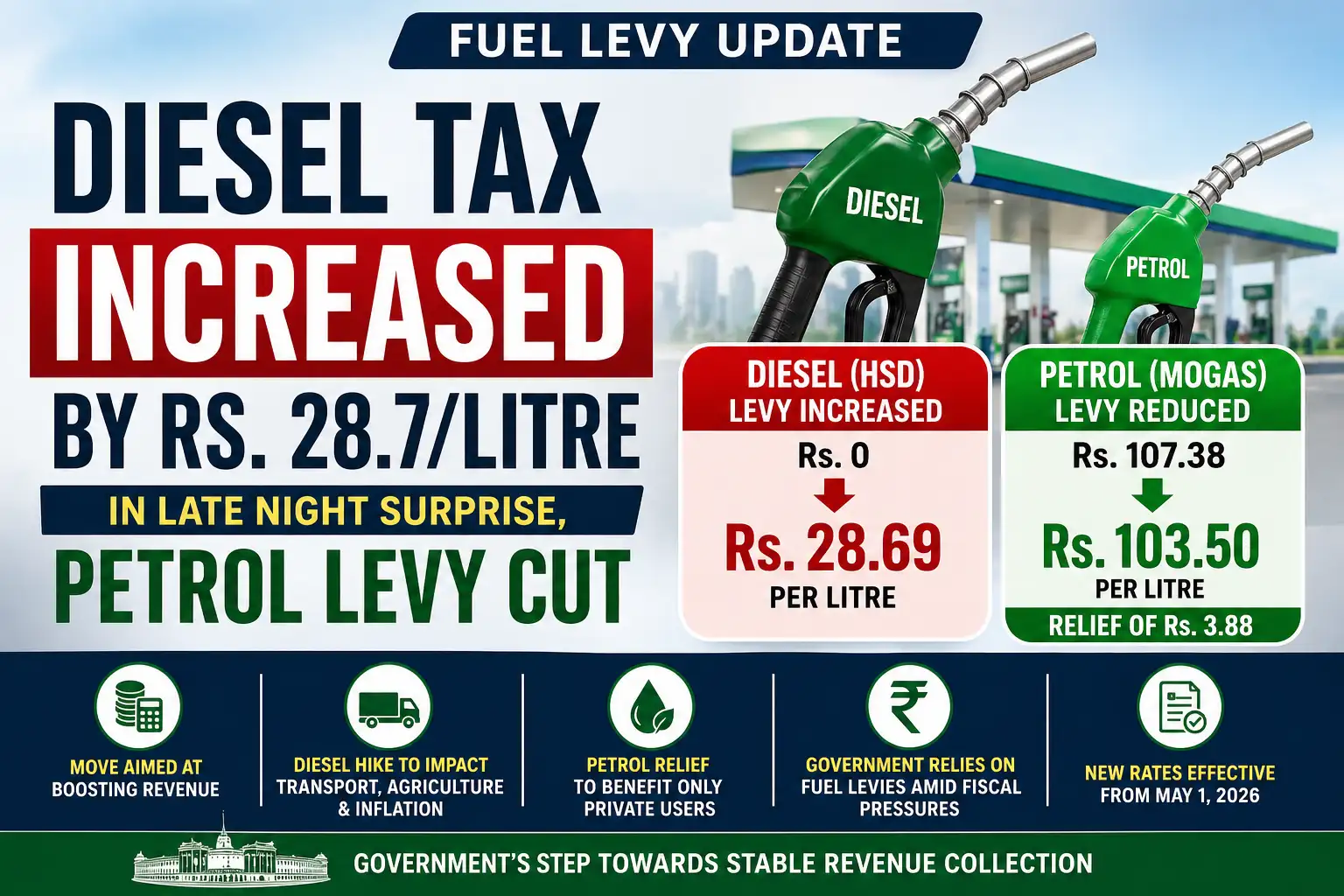
Diesel Tax Increased by Rs. 28.7 Litre Petrol Levy Reduced
The federal government has announced a major change in petroleum levies through a late-night notification effective from 1st May 2026 that significantly increases the tax on diesel and Diesel Tax Increased by Rs. 28.7 Litre Petrol Levy Reduced in Pakistan.
New Fuel Levy Rates in Pakistan (May 2026)
According to official details:
- High-Speed Diesel (HSD):
Previous Levy: Rs. 0
New Levy: Rs. 28.69 per litre
- Petrol (Motor Gasoline):
Previous Levy: Rs. 107.38 per litre
New Levy: Rs. 103.50 per litre
Reduction: Rs. 3.88 per litre
Diesel Tax Increased by Rs. 28.7 Litre, Petrol Levy Reduced which marks a sharp policy shift especially since diesel previously had no petroleum levy.
| Petroleum levy | Previous levy | New levy | Change | Climate support levy |
| High Speed Diesel | Rs 0.00 | Rs 28.69 liter | +Rs 28.69 | Rs 2.50 |
| Petrol | Rs 107.38 | Rs 103.50 liter | – Rs 3.88 | Rs 2.50 |
| HOBC/MS 95-97 RON | _ | Rs 305.37/liter | _ | Rs 2.50 |
| Superior Kerosene Oil | _ | Rs 20.36 | _ | _ |
| Light Diesel Oil | _ | Rs 15.84/liter | _ | _ |
| Furnace Oil | _ | Rs 77.00/liter | _ | Rs 2.50 |
Government Increased Diesel Tax
The government is under fiscal pressure and needs stable revenue sources. Petroleum levies are preferred because:
- They are collected directly at fuel pricing stage
- No risk of tax evasion
- Provide consistent income
Pakistan is facing tax collection challenges because Diesel Tax Increased by Rs. 28.7 Litre Petrol Levy Reduced particularly with the Federal Board of Revenue (FBR) which has struggled to meet revenue targets.
Economic Impact of Diesel Levy Increase
The increase in diesel tax will have wide economic consequences by which the Diesel Tax Increased by Rs. 28.7 Litre Petrol Levy Reduced in Pakistan:
Transport Costs Will Rise
Diesel fuels trucks and buses, so:
- Freight charges will increase
- Public transport fares may go up
Agriculture Will Be Affected
- Tractors and farming equipment use diesel
- Food production costs will increase
Industrial Impact
- Higher logistics and supply chain costs
- Increased prices of goods
Petrol Levy Cut – Limited Relief
The reduction in petrol levy offers minor relief:
- Benefits mainly private car and bike users
- Does not significantly impact inflation
Compared to diesel the petrol has less influence on large scale economic activity.
Read more : CM Punjab Maryam Nawaz launch Rahmat Card Scheme for Widows and Orphans
Fuel Levies Confirmed
The government has also maintained or adjusted levies on:
- Kerosene oil
- Light diesel oil
- Furnace oil
- Premium fuels (HOBC)
Additionally, the Climate Support Levy continues on selected petroleum products and the Diesel is considered more critical because it powers:
- Transport sector
- Agriculture machinery
- Industrial supply chains
Any increase in diesel prices has a direct and stronger impact on inflation compared to petrol.
Conclusion
The latest petroleum levy changes highlight the government’s strategy to increase revenue while offering limited public relief. Although Diesel Tax Increased by Rs. 28.7 Litre Petrol Levy Reduced petrol users may benefit slightly the sharp increase in diesel tax is expected to raise transportation costs, food prices and overall inflation.
FAQ’s
1. What is the new diesel levy in Pakistan?
The government imposed a levy on Diesel Tax Increased by Rs. 28.7 Litre Petrol Levy Reduced.
2. Has petrol become cheaper?
Yes, the levy on petrol has been reduced by Rs. 3.88 per litre.
3. Why did the government increase diesel tax?
To generate revenue and manage fiscal challenges.
4. Who will be most affected?
Transporters, farmers, businesses, and ultimately the general public.
5. Will inflation increase?
Yes, higher diesel costs usually lead to higher prices of goods and services.
7. What is the Climate Support Levy?
It is an additional charge on fuels to support environmental initiatives.