
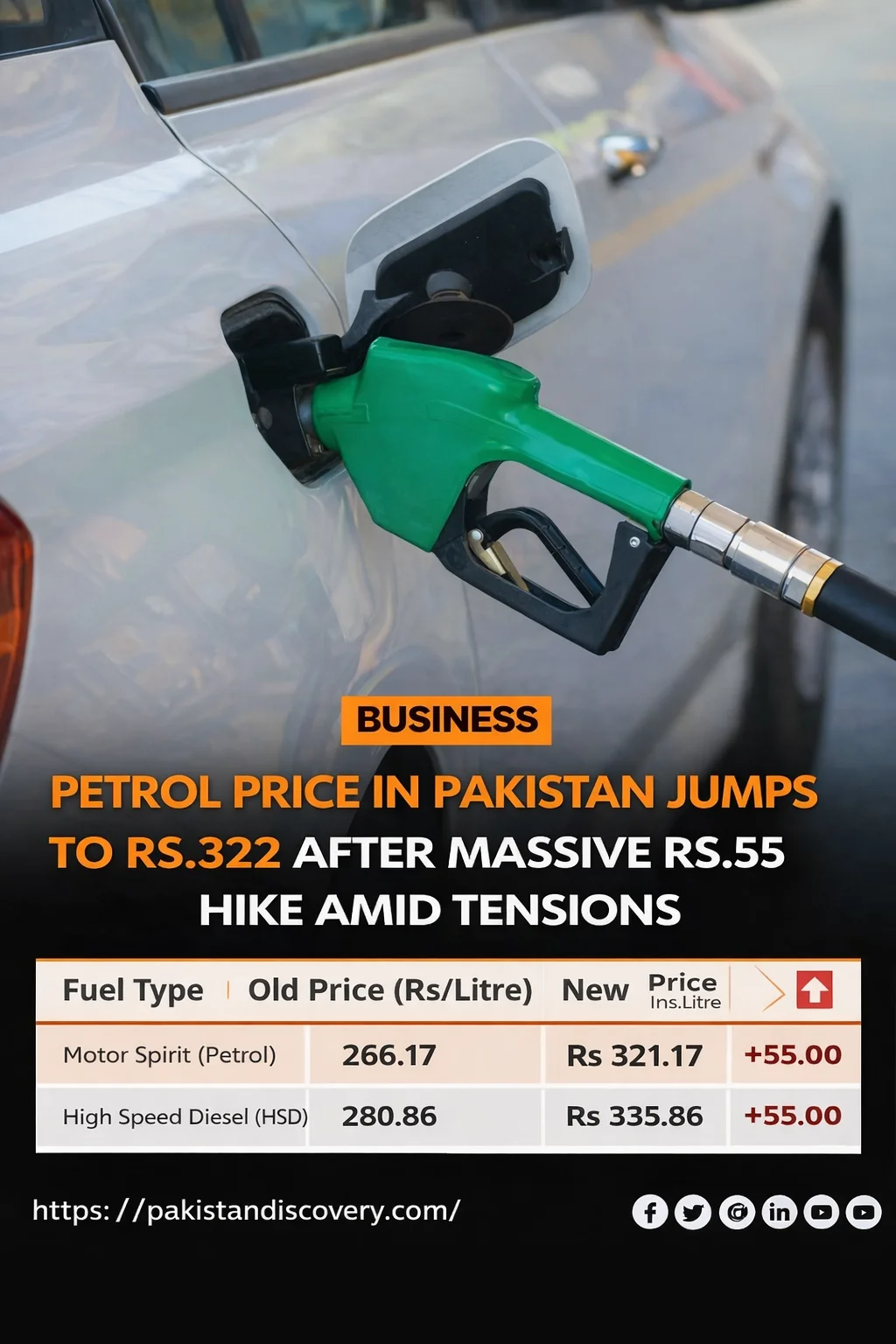
Pakistan Faces a Double Economic Shock: Fuel Prices Surge by Rs55 and Stock Market Tumbles
Pakistan experienced a difficult economic moment as the government announced a sharp increase in fuel prices, while the Pakistan Stock Exchange also faced a major decline on the same day.
According to the Ministry of Energy (Petroleum Division) press release issued on 6 March 2026, the government revised petroleum prices following recommendations from OGRA. The new prices will come into effect from 7 March 2026.
The announcement has created widespread concern among citizens, businesses, and investors who are already dealing with rising economic pressures.
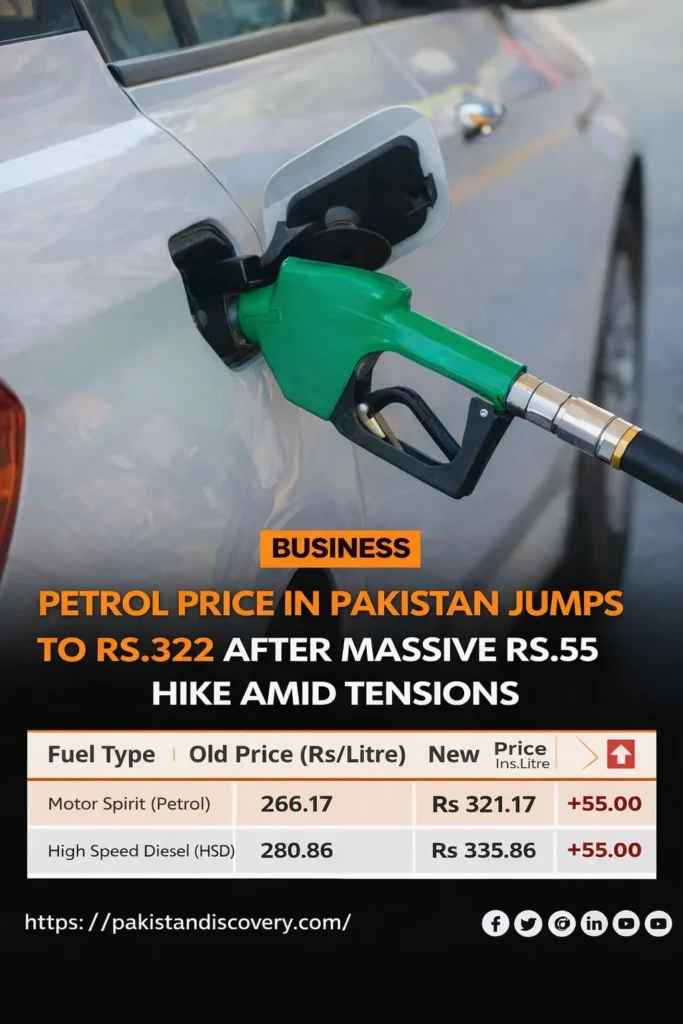
New Petrol and Diesel Prices in Pakistan
The latest notification shows a Rs55 increase per litre for both petrol and high-speed diesel.
Here are the updated prices:
| Fuel Type | Old Price (Rs/Litre) | New Price (Rs/Litre) | Increase |
|---|---|---|---|
| Motor Spirit (Petrol) | 266.17 | 321.17 | +55.00 |
| High Speed Diesel (HSD) | 280.86 | 335.86 | +55.00 |
This sudden jump means petrol has crossed Rs321 per litre, while diesel now stands at Rs335.86 per litre.
For many Pakistanis, this increase feels overwhelming because fuel prices directly influence the cost of everyday life.
Immediate Impact on Daily Life
Fuel is deeply connected to the economy. When petrol and diesel prices rise, transportation costs increase almost instantly.
Motorcycle riders, car owners, taxi drivers, and delivery workers will now spend much more on fuel each month.
Public transport fares are also expected to rise soon. This could affect millions of people who rely on buses, vans, and rickshaws to travel to work, schools, and markets.
For families already struggling with inflation, even small increases in daily expenses can create serious financial stress.
Transport and Food Prices Likely to Rise
Diesel is widely used in trucks and goods transportation, which means the price hike will likely affect the cost of essential goods.
When transport becomes expensive, businesses often pass that cost to customers. As a result, prices of vegetables, fruits, flour, and other household items may increase in the coming days.
Small business owners and shopkeepers are already worried about how they will manage these rising costs.
Stock Market Also Faces a Major Drop
While citizens were reacting to the fuel price hike, the Pakistan Stock Exchange (PSX) also experienced a sharp decline.
The KSE-100 index plunged by more than 3,700 points, closing at 157,496.
Such a large drop in a single day reflects growing uncertainty among investors.
Market analysts say that global tensions and economic uncertainty played a major role in shaking investor confidence.
When investors become uncertain about the future, many prefer to withdraw their investments, which leads to sudden market declines.
Global Pressures Behind the Crisis
Experts believe that international developments are also influencing Pakistan’s economy.
Fluctuations in global oil markets and rising geopolitical tensions often push oil-importing countries like Pakistan into difficult economic situations.
Because Pakistan imports a large portion of its fuel, even small global changes can quickly affect domestic fuel prices.
Public Reaction and Concerns
Across the country, people are expressing deep concern about the new prices.
Workers who travel long distances, delivery riders, ride-hailing drivers, and transport operators are among the most affected groups.
For many households, the rising cost of fuel means making difficult choices about spending, saving, and managing daily life.
Conclusion
The sudden increase in petrol and diesel prices, combined with the sharp fall in the Pakistan Stock Exchange, has created a challenging moment for the country. With petrol rising from Rs266.17 to Rs321.17 and diesel from Rs280.86 to Rs335.86, the financial pressure on households, businesses, and transport sectors is expected to grow.
For ordinary citizens, these numbers represent more than economic statistics. They directly affect the cost of travel, food, and daily living. At the same time, the 3,700-point drop in the KSE-100 index highlights growing uncertainty in the financial market.
As Pakistan moves forward, the focus will remain on economic stability, global developments, and policies that can ease the burden on citizens. Many people across the country hope that the coming weeks will bring some relief and stability to both fuel prices and financial markets.
FAQs
1. What is the new petrol price in Pakistan in March 2026?
The new petrol price in Pakistan is Rs321.17 per litre, effective from 7 March 2026, after an increase of Rs55 per litre.
2. What is the new diesel price in Pakistan?
High Speed Diesel (HSD) now costs Rs335.86 per litre, up from Rs280.86, reflecting an increase of Rs55 per litre.
3. Why did petrol prices increase in Pakistan?
The government revised petroleum prices based on recommendations from OGRA and changes in international oil markets and economic conditions.
4. How will the fuel price increase affect people?
Higher fuel prices usually lead to increased transportation costs, which can raise the prices of goods, food, and daily services across the country.